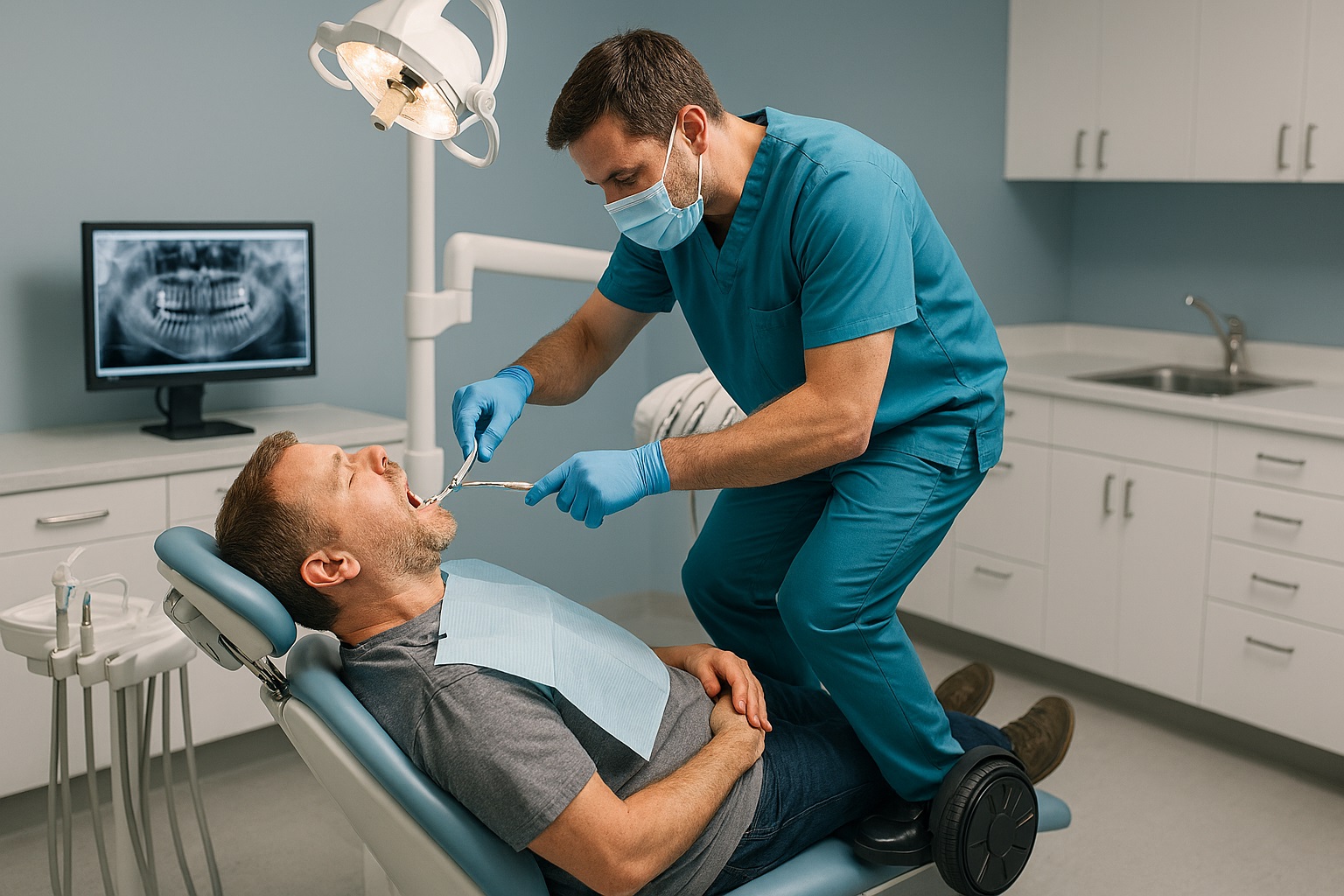
The Strange Case of The Alaskan Hoverboard Dentist
In 2016, a jaw-dropping video captured a dentist performing a tooth extraction while riding a hoverboard. The hoverboard dentist, Seth Lookhart of Alaska, filmed himself extracting a sedated patient’s tooth while balancing on a hoverboard, later sending the video to friends. This bizarre spectacle quickly went viral, but what began as an internet oddity snowballed into one of the most serious professional misconduct cases in U.S. dental history.
Over subsequent years, Lookhart was prosecuted, convicted, and had his license revoked. The legal and ethical ramifications of his “hoverboard dentist” antics are profound. Beyond the sensationalism lies a cautionary tale about patient rights, medical ethics, professional oversight, and the duty of care. In this article, we explore key dimensions of that case—especially the issues of patient privacy and rights—and reflect on how the profession and public should react.
1. Who Was the Hoverboard Dentist and What Happened?
The phrase hoverboard dentist refers to Dr. Seth Lookhart, a dentist in Alaska who performed an extraction while riding a hoverboard.
The incident was not trivial or isolated. Between May 2016 and March 2017, Lookhart systematically administered intravenous sedation to patients—often unethically—so he could bill Medicaid for expensive procedures and maximize reimbursements. He also billed for sedation services that were not performed or inflated the costs.
In one infamous case, he stood on a hoverboard mid-extraction while the patient was sedated, recorded it, and sent the video to others. The patient, Veronica Wilhelm, testified that she had not consented to be filmed and would never have allowed such a practice had she known.
In January 2020, he was convicted on 46 counts, including Medicaid fraud, scheme to defraud, theft, reckless endangerment, and illegal dental acts. He was later sentenced to 20 years (8 years suspended) in prison.
Following that, the Alaska Board of Dental Examiners revoked his license. That revocation was upheld in successive appeals and final affirmation by the Alaska Supreme Court in 2024. As of that ruling, he is permanently banned from practicing dentistry in Alaska.
The case thus escalated from a sensational video to a landmark legal precedent about professional accountability and patient protection.
2. Legal and Ethical Failures: Why the Hoverboard Dentist Case Mattered
The hoverboard dentist case brings together multiple forms of misconduct in a single saga:
Fraudulent billing and Medicaid abuse. Lookhart overcharged Medicaid by more than $1.6 million by billing for sedation procedures that either weren’t performed or weren’t properly justified.
Standard of care and sedation violations. He administered IV sedation beyond his permit scope, sedated multiple patients simultaneously, failed to monitor vital signs properly, and endangered patients’ lives. Two patients nearly died: one’s heart rate dropped to 19 beats per minute, and another’s vital signs became inconsistent with life.
Consent, autonomy, and filmed extraction. The hoverboard video was taken without explicit consent, shared with friends and family, and used for boastful communication.
Professional discipline and oversight. The Alaska Board and courts had to grapple with whether revocation was too harsh. Ultimately, they concluded that the scope of misconduct demanded the most severe sanction.
Because this case combined patient harm, systemic fraud, video-based exploitation, and gross ethical failure, it became emblematic of how far a practitioner can stray and how seriously regulatory bodies must respond.
3. Patients’ Rights on Privacy: Filming Without Consent by the Hoverboard Dentist
One of the most disturbing elements of the hoverboard dentist case is the breach of patient privacy through unauthorized filming. The phrase hoverboard dentist has become shorthand for how medical professionals should never misuse video recording of patients.
3.1 The Duty of Confidentiality and Informed Consent
Patients generally have a right to confidentiality and to control how their images or health information are used. In medical and dental contexts, any recording—especially of an invasive procedure—should only occur with explicit informed consent, including disclosure of who will view the video, for what purpose, where it will be stored, and how it will be shared.
In the Lookhart case, the patient (Wilhelm) testified she never consented to being filmed and only discovered the existence of the video when investigators contacted her. That violation is a direct affront to patient autonomy and dignity.
3.2 Regulatory, Legal, and Ethical Ramifications
Unauthorized filming may violate state privacy laws, medical/dental board regulations, and standard ethical codes. It can expose the practitioner to civil liability, disciplinary action, and criminal prosecution, depending on jurisdiction.
In this case, the video became a key piece of evidence in Lookhart’s prosecution. Beyond that, his license revocation and final Supreme Court decision implicitly recognized that exploiting a patient’s image without consent compounded the gravity of other misconduct.
Thus, any dentist or healthcare professional must treat recording as a serious ethical boundary—never to be crossed without full, documented, and freely given patient consent.
4. Patients’ Rights on Privacy: Broader Lessons from the Hoverboard Dentist Saga
In addition to the specific patient in the hoverboard video, the case prompts broader reflection on systemic protections for patient privacy.
4.1 Institutional Safeguards and Oversight
Healthcare practices should have clear policies about photography, videography, and electronic recording. Access to recording devices, mobile phones in treatment rooms, and security on digital files must be controlled. Patients should be reminded of their rights and given explicit consent forms if recording or imaging is necessary for diagnostics, teaching, or communication, with opt-out options.
Regulators and licensing boards should audit and enforce those safeguards. The hoverboard dentist case shows that unchecked recording can become a tool of exploitation.
4.2 Patient Empowerment and Transparency
Patients should be empowered to ask: “Will this be recorded? Who will see it? Can I refuse?” Clinics should post visible notices about recording policies and train staff to protect patient dignity. Consent should be documented, revisited if circumstances change, and revocable by the patient at any time.
In high-risk procedures, ethical review or oversight boards might mandate stricter recording control, particularly for sedation or surgical settings.
By embedding privacy respect into the culture of care, future “hoverboard dentist” style abuses can be prevented. The case reminds us that patient dignity must remain central—even in high-tech or flashy contexts.
5. Discipline, Oversight, and the Final Verdict on the Hoverboard Dentist
The hoverboard dentist case also illustrates how regulatory, legal, and judicial systems can respond to extreme misconduct.
5.1 Revocation of License: A Long Legal Battle
After Lookhart’s criminal convictions in 2020, Alaska regulators moved to revoke his dental license. An administrative law judge recommended revocation, which the Alaska Board adopted. Lookhart appealed to the superior court and then the Alaska Supreme Court.
In May 2024, the Alaska Supreme Court affirmed that the Board had not abused its discretion in revoking his license, concluding that his misconduct was of a scale unseen in prior cases. That decision cemented that Lookhart is barred from practicing dentistry in Alaska.
The press release framed it this way:
“Dr. Lookhart will no longer be able to exploit vulnerable patients for his personal gain.”
5.2 Sentence and Punishment
Lookhart was sentenced to 20 years, with 8 years suspended (i.e. 12 years active time), for his multiple convictions. The case was not just financial exploitation, but targeted vulnerable patients and caused real physical risk.
Traumatized patients, unconsented filming, sedation mishandling, and fraudulent billing made the case especially egregious.
5.3 Broader Professional Impact
This case is already being used as an ethics teaching example in dentistry and health professions. Some dental publications referred to it as a precedent for the seriousness with which regulatory bodies must act. It underscores that professionalism, patient safety, and public trust must always override spectacle or self-promotion.
Regulatory boards in other jurisdictions should take note: emerging technology (hoverboards, cameras, sedation) requires vigilance, and misuse carries serious consequences.
6. What the Hoverboard Dentist Teaches Us Today
What are the lessons from the hoverboard dentist saga for patients, practitioners, and regulators?
Never let spectacle override safety. The hoverboard gimmick was deeply unprofessional—and it masked far more serious misconduct in sedation, consent, and billing.
Consent and transparency are fundamental. Medical recording must always rest on fully informed consent; patients must retain control over their image and procedure data.
Regulation must keep pace with audacity. The case shows that licensing boards must not shy away from revocation in extreme cases—even absent perfect precedent.
Public trust is fragile. A single viral video may draw attention, but trust is earned by routine behavior, ethics, and respect for patient dignity.
Vigilance over sedation. Sedation and anesthesia carry real risk; misuse or overuse to extract profits must be clearly condemned and prevented.
Patients should advocate for themselves. Ask questions, refuse recordings, insist on clarity of purpose, and choose professionals with a strong ethics reputation.
For those in dental or medical regulation, the case is a clarion call for stricter oversight, mandatory auditing of high-risk procedures, and robust whistleblower systems.
References & Further Reading on the Hoverboard Dentist Incident
Below are some references related to the hoverboard dentist case, including major media coverage and legal documents:
“Alaska dentist hoverboard convicted” — CNN coverage of the trial and sentencing
“Dentist on hoverboard while extracting tooth” — WPTV coverage of the video and trial
“Press Release — Anchorage Dentist Seth Lookhart Convicted” (Alaska Department of Law)
“Court affirms decision to pull license of ‘hoverboard’ dentist” — DrBicuspid analysis
“Lookhart v. State of Alaska, Board of Dental Examiners” — Alaska Supreme Court opinion via Justia
Anchorage “hoverboard dentist sentenced in Medicaid fraud scheme” — Alaska News Source
Recent Articles












In 2016, a jaw-dropping video captured a dentist performing a tooth extraction while riding a hoverboard. The hoverboard dentist, Seth Lookhart of Alaska, filmed himself extracting a sedated patient’s tooth while balancing on a hoverboard, later sending the video to friends. This bizarre spectacle quickly went viral, but what began as an internet oddity snowballed into one of the most serious professional misconduct cases in U.S. dental history.
Over subsequent years, Lookhart was prosecuted, convicted, and had his license revoked. The legal and ethical ramifications of his “hoverboard dentist” antics are profound. Beyond the sensationalism lies a cautionary tale about patient rights, medical ethics, professional oversight, and the duty of care. In this article, we explore key dimensions of that case—especially the issues of patient privacy and rights—and reflect on how the profession and public should react.
1. Who Was the Hoverboard Dentist and What Happened?
The phrase hoverboard dentist refers to Dr. Seth Lookhart, a dentist in Alaska who performed an extraction while riding a hoverboard.
The incident was not trivial or isolated. Between May 2016 and March 2017, Lookhart systematically administered intravenous sedation to patients—often unethically—so he could bill Medicaid for expensive procedures and maximize reimbursements. He also billed for sedation services that were not performed or inflated the costs.
In one infamous case, he stood on a hoverboard mid-extraction while the patient was sedated, recorded it, and sent the video to others. The patient, Veronica Wilhelm, testified that she had not consented to be filmed and would never have allowed such a practice had she known.
In January 2020, he was convicted on 46 counts, including Medicaid fraud, scheme to defraud, theft, reckless endangerment, and illegal dental acts. He was later sentenced to 20 years (8 years suspended) in prison.
Following that, the Alaska Board of Dental Examiners revoked his license. That revocation was upheld in successive appeals and final affirmation by the Alaska Supreme Court in 2024. As of that ruling, he is permanently banned from practicing dentistry in Alaska.
The case thus escalated from a sensational video to a landmark legal precedent about professional accountability and patient protection.
2. Legal and Ethical Failures: Why the Hoverboard Dentist Case Mattered
The hoverboard dentist case brings together multiple forms of misconduct in a single saga:
Fraudulent billing and Medicaid abuse. Lookhart overcharged Medicaid by more than $1.6 million by billing for sedation procedures that either weren’t performed or weren’t properly justified.
Standard of care and sedation violations. He administered IV sedation beyond his permit scope, sedated multiple patients simultaneously, failed to monitor vital signs properly, and endangered patients’ lives. Two patients nearly died: one’s heart rate dropped to 19 beats per minute, and another’s vital signs became inconsistent with life.
Consent, autonomy, and filmed extraction. The hoverboard video was taken without explicit consent, shared with friends and family, and used for boastful communication.
Professional discipline and oversight. The Alaska Board and courts had to grapple with whether revocation was too harsh. Ultimately, they concluded that the scope of misconduct demanded the most severe sanction.
Because this case combined patient harm, systemic fraud, video-based exploitation, and gross ethical failure, it became emblematic of how far a practitioner can stray and how seriously regulatory bodies must respond.
3. Patients’ Rights on Privacy: Filming Without Consent by the Hoverboard Dentist
One of the most disturbing elements of the hoverboard dentist case is the breach of patient privacy through unauthorized filming. The phrase hoverboard dentist has become shorthand for how medical professionals should never misuse video recording of patients.
3.1 The Duty of Confidentiality and Informed Consent
Patients generally have a right to confidentiality and to control how their images or health information are used. In medical and dental contexts, any recording—especially of an invasive procedure—should only occur with explicit informed consent, including disclosure of who will view the video, for what purpose, where it will be stored, and how it will be shared.
In the Lookhart case, the patient (Wilhelm) testified she never consented to being filmed and only discovered the existence of the video when investigators contacted her. That violation is a direct affront to patient autonomy and dignity.
3.2 Regulatory, Legal, and Ethical Ramifications
Unauthorized filming may violate state privacy laws, medical/dental board regulations, and standard ethical codes. It can expose the practitioner to civil liability, disciplinary action, and criminal prosecution, depending on jurisdiction.
In this case, the video became a key piece of evidence in Lookhart’s prosecution. Beyond that, his license revocation and final Supreme Court decision implicitly recognized that exploiting a patient’s image without consent compounded the gravity of other misconduct.
Thus, any dentist or healthcare professional must treat recording as a serious ethical boundary—never to be crossed without full, documented, and freely given patient consent.
4. Patients’ Rights on Privacy: Broader Lessons from the Hoverboard Dentist Saga
In addition to the specific patient in the hoverboard video, the case prompts broader reflection on systemic protections for patient privacy.
4.1 Institutional Safeguards and Oversight
Healthcare practices should have clear policies about photography, videography, and electronic recording. Access to recording devices, mobile phones in treatment rooms, and security on digital files must be controlled. Patients should be reminded of their rights and given explicit consent forms if recording or imaging is necessary for diagnostics, teaching, or communication, with opt-out options.
Regulators and licensing boards should audit and enforce those safeguards. The hoverboard dentist case shows that unchecked recording can become a tool of exploitation.
4.2 Patient Empowerment and Transparency
Patients should be empowered to ask: “Will this be recorded? Who will see it? Can I refuse?” Clinics should post visible notices about recording policies and train staff to protect patient dignity. Consent should be documented, revisited if circumstances change, and revocable by the patient at any time.
In high-risk procedures, ethical review or oversight boards might mandate stricter recording control, particularly for sedation or surgical settings.
By embedding privacy respect into the culture of care, future “hoverboard dentist” style abuses can be prevented. The case reminds us that patient dignity must remain central—even in high-tech or flashy contexts.
5. Discipline, Oversight, and the Final Verdict on the Hoverboard Dentist
The hoverboard dentist case also illustrates how regulatory, legal, and judicial systems can respond to extreme misconduct.
5.1 Revocation of License: A Long Legal Battle
After Lookhart’s criminal convictions in 2020, Alaska regulators moved to revoke his dental license. An administrative law judge recommended revocation, which the Alaska Board adopted. Lookhart appealed to the superior court and then the Alaska Supreme Court.
In May 2024, the Alaska Supreme Court affirmed that the Board had not abused its discretion in revoking his license, concluding that his misconduct was of a scale unseen in prior cases. That decision cemented that Lookhart is barred from practicing dentistry in Alaska.
The press release framed it this way:
“Dr. Lookhart will no longer be able to exploit vulnerable patients for his personal gain.”
5.2 Sentence and Punishment
Lookhart was sentenced to 20 years, with 8 years suspended (i.e. 12 years active time), for his multiple convictions. The case was not just financial exploitation, but targeted vulnerable patients and caused real physical risk.
Traumatized patients, unconsented filming, sedation mishandling, and fraudulent billing made the case especially egregious.
5.3 Broader Professional Impact
This case is already being used as an ethics teaching example in dentistry and health professions. Some dental publications referred to it as a precedent for the seriousness with which regulatory bodies must act. It underscores that professionalism, patient safety, and public trust must always override spectacle or self-promotion.
Regulatory boards in other jurisdictions should take note: emerging technology (hoverboards, cameras, sedation) requires vigilance, and misuse carries serious consequences.
6. What the Hoverboard Dentist Teaches Us Today
What are the lessons from the hoverboard dentist saga for patients, practitioners, and regulators?
Never let spectacle override safety. The hoverboard gimmick was deeply unprofessional—and it masked far more serious misconduct in sedation, consent, and billing.
Consent and transparency are fundamental. Medical recording must always rest on fully informed consent; patients must retain control over their image and procedure data.
Regulation must keep pace with audacity. The case shows that licensing boards must not shy away from revocation in extreme cases—even absent perfect precedent.
Public trust is fragile. A single viral video may draw attention, but trust is earned by routine behavior, ethics, and respect for patient dignity.
Vigilance over sedation. Sedation and anesthesia carry real risk; misuse or overuse to extract profits must be clearly condemned and prevented.
Patients should advocate for themselves. Ask questions, refuse recordings, insist on clarity of purpose, and choose professionals with a strong ethics reputation.
For those in dental or medical regulation, the case is a clarion call for stricter oversight, mandatory auditing of high-risk procedures, and robust whistleblower systems.
References & Further Reading on the Hoverboard Dentist Incident
Below are some references related to the hoverboard dentist case, including major media coverage and legal documents:
“Alaska dentist hoverboard convicted” — CNN coverage of the trial and sentencing
“Dentist on hoverboard while extracting tooth” — WPTV coverage of the video and trial
“Press Release — Anchorage Dentist Seth Lookhart Convicted” (Alaska Department of Law)
“Court affirms decision to pull license of ‘hoverboard’ dentist” — DrBicuspid analysis
“Lookhart v. State of Alaska, Board of Dental Examiners” — Alaska Supreme Court opinion via Justia
Anchorage “hoverboard dentist sentenced in Medicaid fraud scheme” — Alaska News Source
Recent Articles
Peri-Implantitis Treatment & Prevention Methods
Peri-Implantitis Treatment & Prevention Methods Peri-implantitis remains one of the most significant biological complications affecting dental implants, posing a serious threat to long-term implant [...]
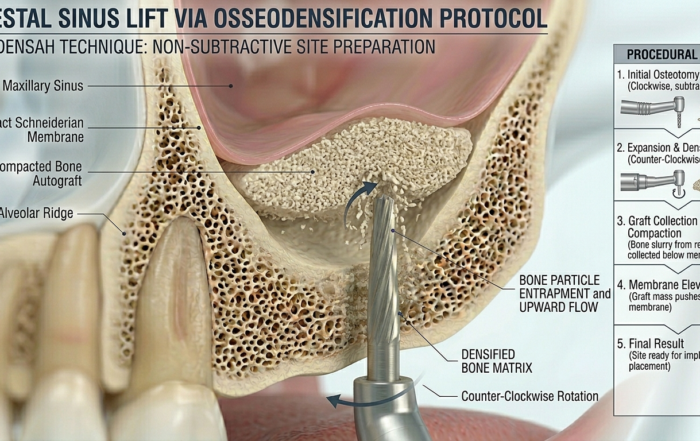
Latest Sinus Lifting Techniques in Modern Implant Dentistry
Latest Sinus Lifting Techniques in Modern Implant Dentistry A Comprehensive Clinical Review Introduction to Sinus Lifting in Implantology Sinus lifting, or maxillary sinus floor [...]
Biomechanics of the Triple Abutment & BOPiT Concept
Dental Biomechanics · Implant Science · Clinical Evidence Biomechanics of the Triple Abutment & BOPiT Concept How a saddle-shaped mathematical surface is rewriting the rules of load distribution [...]
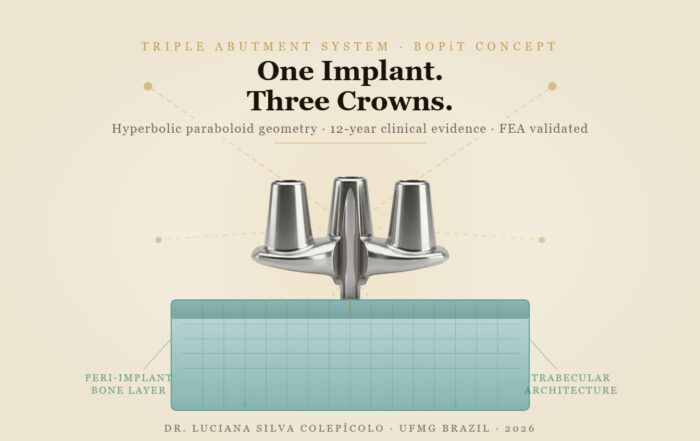
The Woman Who Proved One Implant Could Hold Three Crowns
The Woman Who Proved One Implant Could Hold Three Crowns While the dental establishment looked away, Dr. Luciana Colepícolo spent 12 years building the [...]
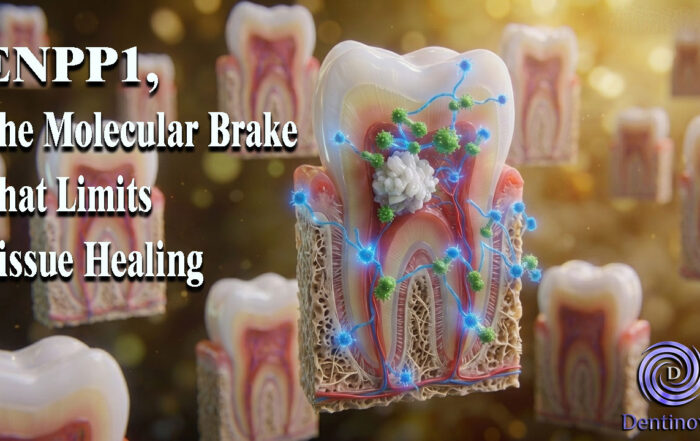
ENPP1, The Molecular Brake That Limits Tissue Healing
ENPP1, The Molecular Brake That Limits Tissue Healing Introduction: A New Biological Barrier to Dental Regeneration Meet ENPP1—a protein most dentists have never heard [...]
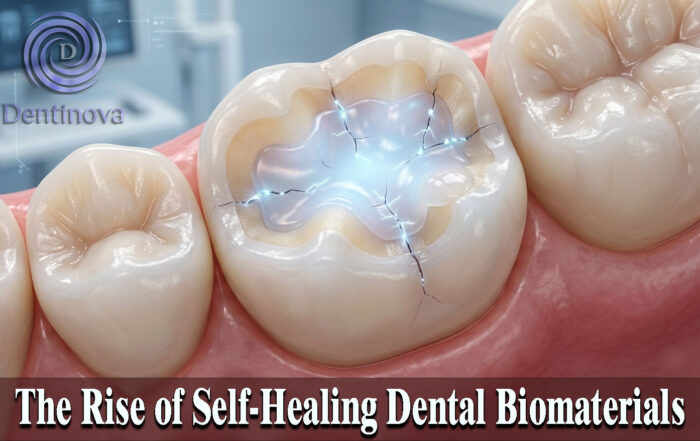
The Rise of Self‑Healing Dental Biomaterials
The Rise of Self‑Healing Dental Biomaterials Introduction In modern restorative dentistry, durability and longevity of materials remain among the greatest clinical challenges. Traditional dental [...]