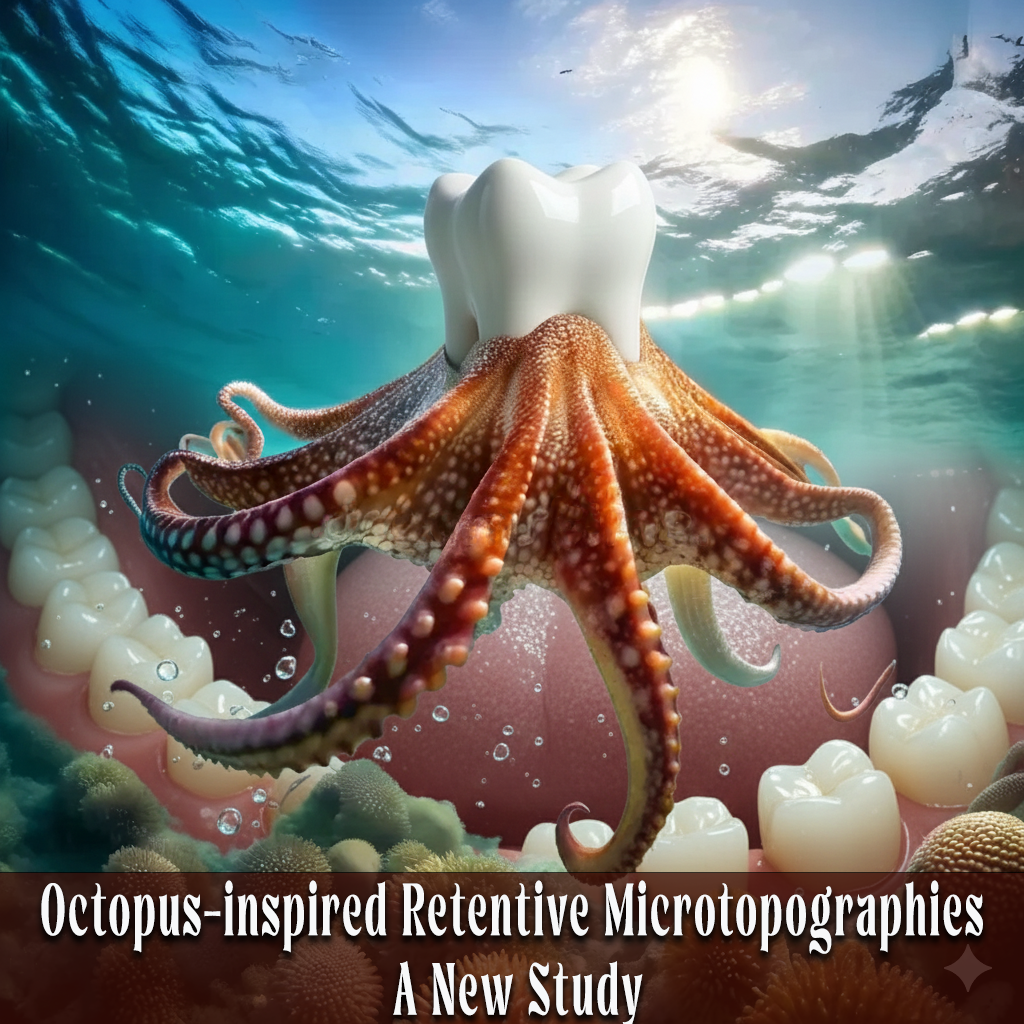
Octopus-Inspired Retentive Microtopographies: A New Study
Retention remains one of the most persistent clinical challenges in prosthodontics, particularly for complete dentures and removable dental appliances placed in the moist, dynamic oral environment. Conventional retentive strategies, such as mechanical undercuts, denture adhesives, and implant assistance, often fall short due to patient discomfort, biological limitations, or increased cost. A recent bioinspired study led by researchers affiliated with King’s College London introduces a promising alternative: Octopus-inspired retentive microtopographies, engineered to enhance adhesion through nature-derived surface design rather than external agents or invasive procedures.
This new approach draws inspiration from the extraordinary attachment capabilities of octopus suckers, translating biological adhesion principles into advanced dental material science. The result is a next-generation retentive surface designed specifically to function under wet oral conditions, potentially redefining how dental prostheses achieve stability.
Understanding Octopus-Inspired Retentive Microtopographies
Octopus-inspired retentive microtopographies are engineered surface architectures that mimic the micro- and nano-scale geometry of octopus suckers. In nature, octopus suckers achieve powerful, reversible adhesion through a combination of suction, surface conformity, and physicochemical interactions. Translating this mechanism into dentistry involves creating microstructured patterns on denture-bearing surfaces that can interact more effectively with the oral mucosa.
Unlike traditional smooth acrylic denture bases, these microtopographies increase the effective contact area and generate localized negative pressure when seated against soft tissues. This design allows for enhanced retention without relying on chemical adhesives or mechanical fixation, aligning with modern minimally invasive dental philosophies.
The Scientific Rationale Behind Octopus-Inspired Dental Retention
The oral cavity presents a uniquely hostile environment for adhesion due to constant saliva flow, variable mucosal resilience, and frequent functional movement. Traditional adhesive systems tend to degrade or lose efficacy under such conditions. Octopus-inspired retentive microtopographies address this issue by integrating both physical and physicochemical adhesion mechanisms.
The microstructured surface interacts with saliva as a functional medium rather than an obstacle. Thin saliva films become part of the retention mechanism, facilitating capillary forces and pressure differentials similar to those observed in natural suction systems. This dual-mode adhesion—mechanical interlocking combined with fluid-mediated retention—represents a significant departure from conventional denture design.
Octopus-inspired Retentive Microtopographies in Prosthodontic Applications
One of the most compelling aspects of Octopus-inspired retentive microtopographies is their broad applicability across prosthodontics. The study primarily focuses on complete dentures, particularly mandibular dentures, which are notoriously difficult to stabilize. However, the implications extend to partial dentures, obturators, and even temporary prosthetic devices.
By modifying only the tissue-contacting surface of the prosthesis, clinicians can enhance retention without altering occlusion, aesthetics, or overall prosthetic geometry. This makes the technology particularly attractive for elderly patients, medically compromised individuals, or those unwilling or unable to undergo implant surgery.
Material Engineering and Fabrication of Retentive Microtopographies
The fabrication of Octopus-inspired retentive microtopographies relies on advanced manufacturing techniques such as high-resolution 3D printing and two-photon polymerization. These technologies allow for precise replication of biologically inspired surface features at the microscale.
In the referenced study, experimental denture bases were produced with controlled microtopographic patterns and coated with biocompatible materials designed to interact favorably with oral tissues. Mechanical testing demonstrated superior retentive forces compared to conventional smooth surfaces, both with and without the use of commercial denture adhesives.
Importantly, these surfaces maintained their retentive properties over repeated placement and removal cycles, suggesting strong potential for long-term clinical durability.
Clinical Advantages of Octopus-inspired Retentive Microtopographies
The clinical benefits of Octopus-inspired retentive microtopographies extend beyond improved prosthesis stability. By reducing dependence on adhesives, patients experience improved comfort, hygiene, and confidence. The microtopographic surfaces distribute forces more evenly across the mucosa, potentially reducing localized pressure points and tissue irritation.
From a clinician’s perspective, this innovation simplifies treatment planning. Retention enhancement becomes a material-level solution rather than a procedural one, reducing chair time and post-delivery adjustments. Additionally, the non-invasive nature of this approach aligns well with contemporary trends in patient-centered dental care.
Future Implications for Bioinspired Dentistry
The introduction of Octopus-inspired retentive microtopographies signals a broader shift toward biomimetic strategies in dentistry. Rather than forcing biological tissues to adapt to artificial materials, this approach adapts materials to function harmoniously within biological systems.
Future research is expected to explore long-term clinical outcomes, patient-reported satisfaction, and potential applications beyond removable prosthodontics. There is also growing interest in integrating similar microtopographies into implant abutments, orthodontic appliances, and soft-tissue-contacting surgical devices.
As digital dentistry continues to evolve, the integration of bioinspired surface engineering may become a standard component of prosthetic design workflows.
Frequently Asked Questions (FAQ)
1. What are Octopus-inspired retentive microtopographies?
They are bioinspired surface designs that mimic octopus sucker microstructures to enhance dental prosthesis retention through physical and fluid-mediated adhesion.
2. How do these microtopographies improve denture retention?
They increase the surface contact area and create localized suction and capillary forces, thereby improving stability in wet oral conditions without the need for adhesives.
3. Are Octopus-inspired retentive microtopographies safe for oral tissues?
Yes. The materials and surface designs used in the study are biocompatible and intended to interact gently with the oral mucosa.
4. Can this technology replace dental implants for retention?
While not a replacement for implants in all cases, it offers a non-invasive alternative for patients who cannot undergo implant therapy.
5. Do these surfaces wear out over time?
Laboratory testing indicates good durability over repeated insertion and removal cycles, though long-term clinical studies are ongoing.
6. When might this technology become clinically available?
Further clinical trials and regulatory approvals are required, but the concept is highly promising for near-future prosthodontic applications.
Reference
Recent Articles











Retention remains one of the most persistent clinical challenges in prosthodontics, particularly for complete dentures and removable dental appliances placed in the moist, dynamic oral environment. Conventional retentive strategies, such as mechanical undercuts, denture adhesives, and implant assistance, often fall short due to patient discomfort, biological limitations, or increased cost. A recent bioinspired study led by researchers affiliated with King’s College London introduces a promising alternative: Octopus-inspired retentive microtopographies, engineered to enhance adhesion through nature-derived surface design rather than external agents or invasive procedures.
This new approach draws inspiration from the extraordinary attachment capabilities of octopus suckers, translating biological adhesion principles into advanced dental material science. The result is a next-generation retentive surface designed specifically to function under wet oral conditions, potentially redefining how dental prostheses achieve stability.
Understanding Octopus-Inspired Retentive Microtopographies
Octopus-inspired retentive microtopographies are engineered surface architectures that mimic the micro- and nano-scale geometry of octopus suckers. In nature, octopus suckers achieve powerful, reversible adhesion through a combination of suction, surface conformity, and physicochemical interactions. Translating this mechanism into dentistry involves creating microstructured patterns on denture-bearing surfaces that can interact more effectively with the oral mucosa.
Unlike traditional smooth acrylic denture bases, these microtopographies increase the effective contact area and generate localized negative pressure when seated against soft tissues. This design allows for enhanced retention without relying on chemical adhesives or mechanical fixation, aligning with modern minimally invasive dental philosophies.
The Scientific Rationale Behind Octopus-Inspired Dental Retention
The oral cavity presents a uniquely hostile environment for adhesion due to constant saliva flow, variable mucosal resilience, and frequent functional movement. Traditional adhesive systems tend to degrade or lose efficacy under such conditions. Octopus-inspired retentive microtopographies address this issue by integrating both physical and physicochemical adhesion mechanisms.
The microstructured surface interacts with saliva as a functional medium rather than an obstacle. Thin saliva films become part of the retention mechanism, facilitating capillary forces and pressure differentials similar to those observed in natural suction systems. This dual-mode adhesion—mechanical interlocking combined with fluid-mediated retention—represents a significant departure from conventional denture design.
Octopus-inspired Retentive Microtopographies in Prosthodontic Applications
One of the most compelling aspects of Octopus-inspired retentive microtopographies is their broad applicability across prosthodontics. The study primarily focuses on complete dentures, particularly mandibular dentures, which are notoriously difficult to stabilize. However, the implications extend to partial dentures, obturators, and even temporary prosthetic devices.
By modifying only the tissue-contacting surface of the prosthesis, clinicians can enhance retention without altering occlusion, aesthetics, or overall prosthetic geometry. This makes the technology particularly attractive for elderly patients, medically compromised individuals, or those unwilling or unable to undergo implant surgery.
Material Engineering and Fabrication of Retentive Microtopographies
The fabrication of Octopus-inspired retentive microtopographies relies on advanced manufacturing techniques such as high-resolution 3D printing and two-photon polymerization. These technologies allow for precise replication of biologically inspired surface features at the microscale.
In the referenced study, experimental denture bases were produced with controlled microtopographic patterns and coated with biocompatible materials designed to interact favorably with oral tissues. Mechanical testing demonstrated superior retentive forces compared to conventional smooth surfaces, both with and without the use of commercial denture adhesives.
Importantly, these surfaces maintained their retentive properties over repeated placement and removal cycles, suggesting strong potential for long-term clinical durability.
Clinical Advantages of Octopus-inspired Retentive Microtopographies
The clinical benefits of Octopus-inspired retentive microtopographies extend beyond improved prosthesis stability. By reducing dependence on adhesives, patients experience improved comfort, hygiene, and confidence. The microtopographic surfaces distribute forces more evenly across the mucosa, potentially reducing localized pressure points and tissue irritation.
From a clinician’s perspective, this innovation simplifies treatment planning. Retention enhancement becomes a material-level solution rather than a procedural one, reducing chair time and post-delivery adjustments. Additionally, the non-invasive nature of this approach aligns well with contemporary trends in patient-centered dental care.
Future Implications for Bioinspired Dentistry
The introduction of Octopus-inspired retentive microtopographies signals a broader shift toward biomimetic strategies in dentistry. Rather than forcing biological tissues to adapt to artificial materials, this approach adapts materials to function harmoniously within biological systems.
Future research is expected to explore long-term clinical outcomes, patient-reported satisfaction, and potential applications beyond removable prosthodontics. There is also growing interest in integrating similar microtopographies into implant abutments, orthodontic appliances, and soft-tissue-contacting surgical devices.
As digital dentistry continues to evolve, the integration of bioinspired surface engineering may become a standard component of prosthetic design workflows.
Frequently Asked Questions (FAQ)
1. What are Octopus-inspired retentive microtopographies?
They are bioinspired surface designs that mimic octopus sucker microstructures to enhance dental prosthesis retention through physical and fluid-mediated adhesion.
2. How do these microtopographies improve denture retention?
They increase the surface contact area and create localized suction and capillary forces, thereby improving stability in wet oral conditions without the need for adhesives.
3. Are Octopus-inspired retentive microtopographies safe for oral tissues?
Yes. The materials and surface designs used in the study are biocompatible and intended to interact gently with the oral mucosa.
4. Can this technology replace dental implants for retention?
While not a replacement for implants in all cases, it offers a non-invasive alternative for patients who cannot undergo implant therapy.
5. Do these surfaces wear out over time?
Laboratory testing indicates good durability over repeated insertion and removal cycles, though long-term clinical studies are ongoing.
6. When might this technology become clinically available?
Further clinical trials and regulatory approvals are required, but the concept is highly promising for near-future prosthodontic applications.
Reference
Recent Articles
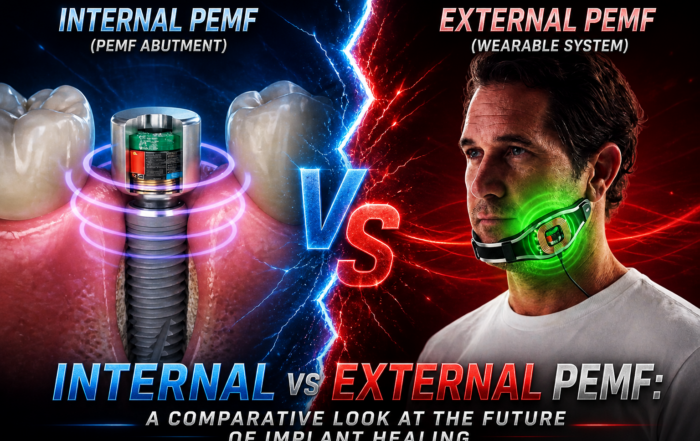
Pulsed Electromagnetic Field (PEMF) Use in Implant Dentistry
Pulsed Electromagnetic Field (PEMF) Use in Implant Dentistry Abstract and Historical Background Pulsed Electromagnetic Field (PEMF) therapy refers to the application of low-frequency electromagnetic [...]
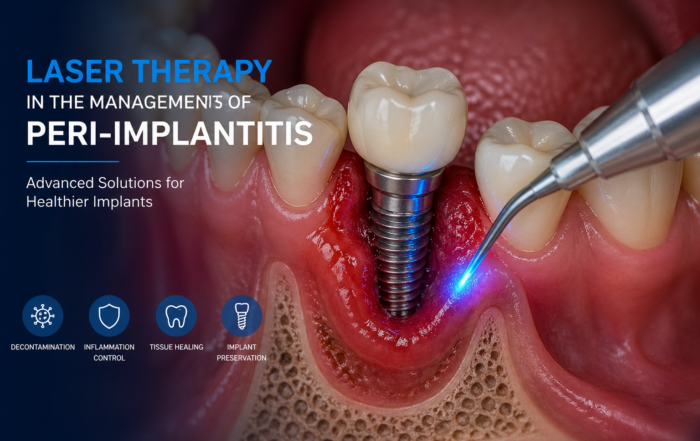
Laser Therapy in the Management of Peri-Implantitis
Laser Therapy in the Management of Peri-Implantitis Laser technology has become an increasingly valuable adjunct in the treatment of peri-implant diseases, particularly peri-implantitis. Its [...]
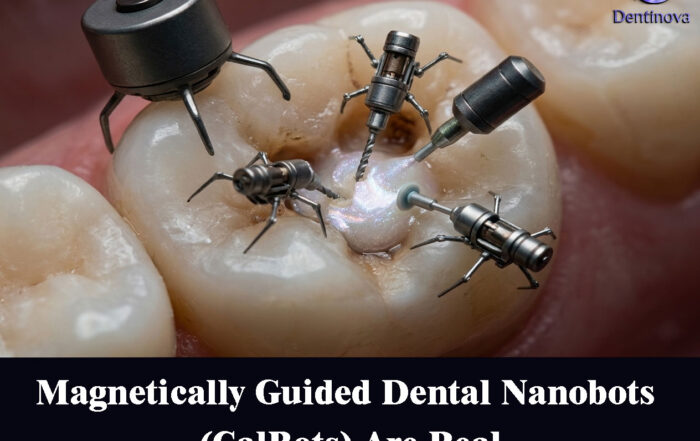
Magnetically Guided Dental Nanobots (CalBots) Are Real
Magnetically Guided Dental Nanobots (CalBots) Are Real The concept of nanobots in dentistry has long been associated with futuristic speculation. However, recent peer-reviewed research [...]
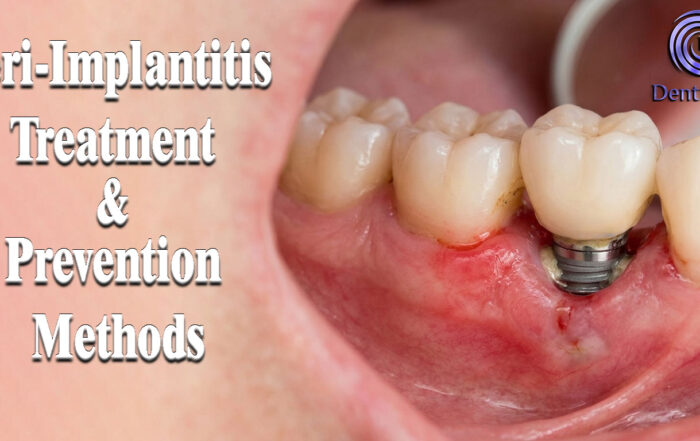
Peri-Implantitis Treatment & Prevention Methods
Peri-Implantitis Treatment & Prevention Methods Peri-implantitis remains one of the most significant biological complications affecting dental implants, posing a serious threat to long-term implant [...]
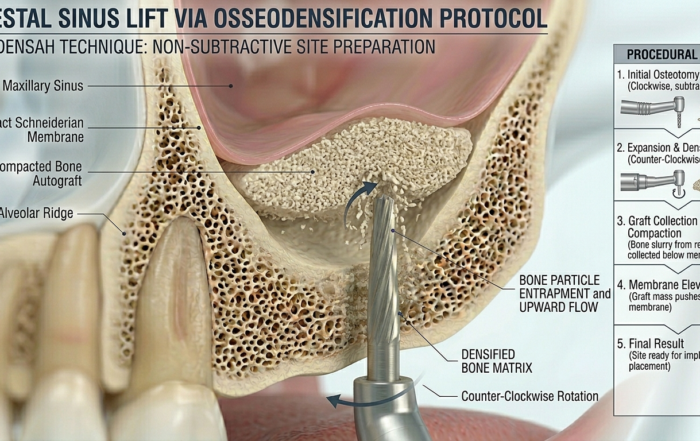
Latest Sinus Lifting Techniques in Modern Implant Dentistry
Latest Sinus Lifting Techniques in Modern Implant Dentistry A Comprehensive Clinical Review Introduction to Sinus Lifting in Implantology Sinus lifting, or maxillary sinus floor [...]
Biomechanics of the Triple Abutment & BOPiT Concept
Dental Biomechanics · Implant Science · Clinical Evidence Biomechanics of the Triple Abutment & BOPiT Concept How a saddle-shaped mathematical surface is rewriting the rules of load distribution [...]