TRG035 : Toregem BioPharma Anti-USAG-1 for Tooth Regeneration
TRG035 : Toregem BioPharma Anti-USAG-1 for Tooth Regeneration
TRG035 : Toregem BioPharma Anti-USAG-1 for Tooth Regeneration
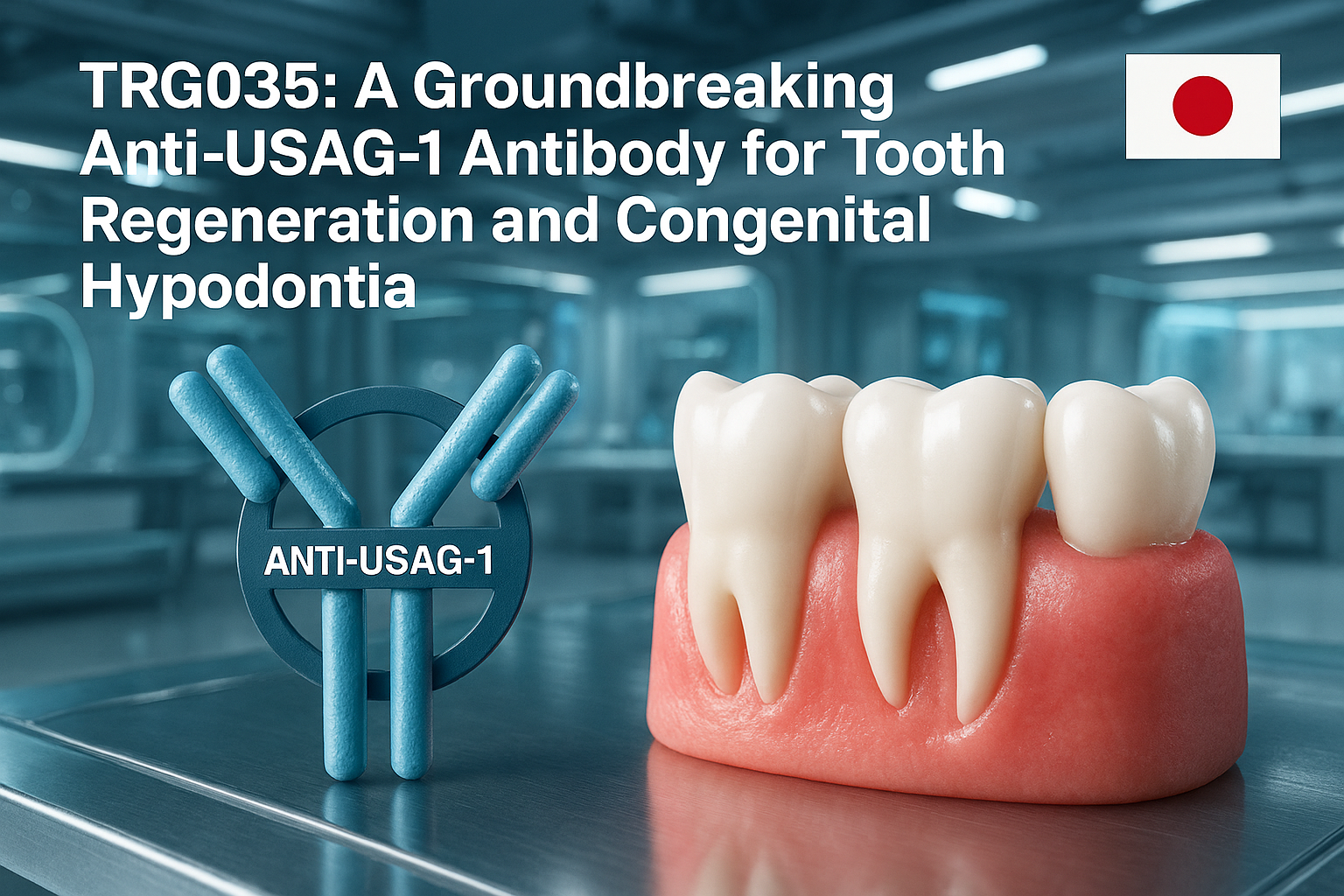
In a major step for dental and regenerative medicine, Toregem BioPharma Co., Ltd., a biotechnology company based in Kyoto, announced that its investigational drug TRG035, “an Anti-USAG-1 Antibody”, has been designated an Orphan Medicinal Product by Japan’s Ministry of Health, Labour and Welfare (MHLW). This recognition moves the company closer to developing the world’s first biological treatment that stimulates natural tooth growth in patients with severe congenital hypodontia. The condition is rare and results in missing permanent teeth.
https://store.dentinova.co.uk/product/anti-usag-1-usag1-sostdc1-recombinant-protein-antigen/
Understanding Severe Congenital Partial Anodontia
Severe congenital partial anodontia, also known as severe congenital hypodontia, occurs when six or more permanent teeth fail to develop. The disorder affects far more than appearance. It can interfere with chewing, speech, and the natural shape of the face. As a result, many patients struggle with daily activities, emotional stress, and a reduced quality of life.
Today, treatment options remain limited to prosthetic solutions such as dentures, bridges, or dental implants. Although these methods improve function and appearance, they do not treat the underlying problem: the lack of natural tooth formation. No available therapy has been able to regenerate missing teeth caused by congenital or acquired conditions. TRG035 may change that.
The Science Behind TRG035
TRG035 is the world’s first Anti-USAG-1 Antibody and marks a new direction in regenerative biology. The drug targets USAG-1, a protein that acts as a natural inhibitor of tooth formation. When USAG-1 is suppressed, previously inactive tooth buds can activate, allowing new teeth to grow.
Extensive preclinical studies support this mechanism. In animal models, the antibody triggered the eruption of healthy, functional teeth—something once believed impossible in mammals. These findings created the foundation for clinical development. Phase I trials are now underway in Japan to assess the drug’s safety and early signs of effectiveness.
TRG035 ecognition as an Orphan Drug: A Milestone
The Ministry of Health, Labour and Welfare granted TRG035 Orphan Medicinal Product status because it targets a rare disease with no effective treatment. The designation provides several benefits, including tax incentives, financial aid, reduced regulatory fees, and priority review. Together, these advantages will help speed up the drug’s development and shorten the timeline for patient access.
For people living with severe congenital hypodontia, TRG035 could represent a complete shift in care. Instead of relying on artificial replacements, patients may eventually benefit from true biological regeneration, the natural growth of new teeth.
How TRG035 Works: Understanding USAG-1
To understand why the therapy is so promising, it helps to look at the role of USAG-1. The protein regulates important biological pathways, including BMP and Wnt signaling, which are essential for tooth development. When USAG-1 blocks these pathways, tooth germs fail to mature.
By neutralizing USAG-1, TRG035 restores these pathways and allows natural tooth formation to proceed, which showcases a new form of regenerative therapy that uses the body’s own mechanisms to repair missing structures.
TRG035 Development Support and National Recognition
In June 2024, the Japan Agency for Medical Research and Development (AMED) selected TRG035 for the FY 2024 Venture Ecosystem Enhancement Project for Drug Discovery. This support provides funding and strategic guidance that will help accelerate the drug’s progress. The project, titled “Development of a novel antibody drug to regenerate missing teeth in patients with congenital anodontia,” highlights the national importance of this research within Japan’s biomedical innovation landscape.
Moreover, the government’s backing reflects a broader interest in advancing regenerative medicine and rare disease therapies. For Toregem BioPharma, the support helps strengthen research momentum and opens the door to future international collaboration.
https://store.dentinova.co.uk/product/mouse-usag-1-sostdc1-protein-95-purity/
TRG035 Toregem BioPharma’s Vision for Tooth Regeneration
Toregem BioPharma Co., Ltd. was founded in 2020 as a spinout from Kyoto University. Under the leadership of CEO Honoka Kiso, the company aims “to create a society where people are not afraid of losing their teeth.” Its work builds on advanced research in molecular biology and supramolecular chemistry.
TRG035 is the company’s flagship product. It could be the first in a new category of regenerative antibody drugs focused on repairing dental and craniofacial tissues rather than replacing them with prosthetics.
Future Possibilities: Beyond Congenital Tooth Loss
Although TRG035 is being developed for congenital hypodontia, Toregem BioPharma plans to investigate its use in cases of acquired tooth loss. Injuries, aging, and periodontal disease cause millions of adults to lose teeth every year. If the drug proves effective in those cases, it could reduce the need for dental implants and transform everyday dental care worldwide.
Collaborations with international medical institutions are expected to support this expansion. In the long term, the company hopes that the insights gained from TRG035 will also benefit other areas of regenerative medicine influenced by BMP and Wnt pathways.
Significance for Global Oral Health
Tooth loss remains one of the most common chronic health conditions around the world. Its effects reach beyond aesthetics. Missing teeth can impair nutrition, increase inflammation, and reduce overall quality of life. If TRG035 completes its clinical phases successfully, it could launch a new era of regenerative dentistry. This shift—from replacing teeth to regrowing them—aligns with global advances in personalized medicine and biological therapies.
https://store.dentinova.co.uk/product/human-usag-1-sostdc1-protein-fc-tag/
Conclusion: The Beginning of Regenerative Dentistry
The development of TRG035 represents more than a scientific milestone. It signals the start of a new era in regenerative dental treatment. By activating natural biological pathways, Toregem BioPharma aims to solve a challenge that has affected humans throughout history: the inability to regrow lost teeth.
With an orphan drug designation, government support, and ongoing clinical trials, TRG035 is progressing quickly. If its development continues to succeed, it may become the world’s first therapy capable of regenerating human teeth. This would offer new hope to patients everywhere who struggle with congenital or acquired tooth loss.
Reference For TRG035
FAQs
1. What is TRG035 ?
TRG035 is an investigational Anti-USAG-1 Antibody that promotes natural tooth growth by blocking USAG-1, a protein that prevents tooth development.
2. Which condition does TRG035 treat?
The drug targets severe congenital hypodontia, a rare disorder in which six or more permanent teeth never form.
3. Why is the orphan drug designation important?
It offers tax benefits, research grants, reduced regulatory fees, and priority review to speed up development.
4. When will TRG035 become available?
The drug is now in Phase I clinical trials in Japan. Its availability depends on the results of future clinical phases.
5. Can TRG035 treat tooth loss in adults?
Not yet. However, Toregem BioPharma aims to explore its use for tooth loss caused by trauma, aging, or periodontal disease in the future.
Recent Articles








In a major step for dental and regenerative medicine, Toregem BioPharma Co., Ltd., a biotechnology company based in Kyoto, announced that its investigational drug TRG035, “an Anti-USAG-1 Antibody”, has been designated an Orphan Medicinal Product by Japan’s Ministry of Health, Labour and Welfare (MHLW). This recognition moves the company closer to developing the world’s first biological treatment that stimulates natural tooth growth in patients with severe congenital hypodontia. The condition is rare and results in missing permanent teeth.
https://store.dentinova.co.uk/product/anti-usag-1-usag1-sostdc1-recombinant-protein-antigen/
Understanding Severe Congenital Partial Anodontia
Severe congenital partial anodontia, also known as severe congenital hypodontia, occurs when six or more permanent teeth fail to develop. The disorder affects far more than appearance. It can interfere with chewing, speech, and the natural shape of the face. As a result, many patients struggle with daily activities, emotional stress, and a reduced quality of life.
Today, treatment options remain limited to prosthetic solutions such as dentures, bridges, or dental implants. Although these methods improve function and appearance, they do not treat the underlying problem: the lack of natural tooth formation. No available therapy has been able to regenerate missing teeth caused by congenital or acquired conditions. TRG035 may change that.
The Science Behind TRG035
TRG035 is the world’s first Anti-USAG-1 Antibody and marks a new direction in regenerative biology. The drug targets USAG-1, a protein that acts as a natural inhibitor of tooth formation. When USAG-1 is suppressed, previously inactive tooth buds can activate, allowing new teeth to grow.
Extensive preclinical studies support this mechanism. In animal models, the antibody triggered the eruption of healthy, functional teeth—something once believed impossible in mammals. These findings created the foundation for clinical development. Phase I trials are now underway in Japan to assess the drug’s safety and early signs of effectiveness.
TRG035 ecognition as an Orphan Drug: A Milestone
The Ministry of Health, Labour and Welfare granted TRG035 Orphan Medicinal Product status because it targets a rare disease with no effective treatment. The designation provides several benefits, including tax incentives, financial aid, reduced regulatory fees, and priority review. Together, these advantages will help speed up the drug’s development and shorten the timeline for patient access.
For people living with severe congenital hypodontia, TRG035 could represent a complete shift in care. Instead of relying on artificial replacements, patients may eventually benefit from true biological regeneration, the natural growth of new teeth.
How TRG035 Works: Understanding USAG-1
To understand why the therapy is so promising, it helps to look at the role of USAG-1. The protein regulates important biological pathways, including BMP and Wnt signaling, which are essential for tooth development. When USAG-1 blocks these pathways, tooth germs fail to mature.
By neutralizing USAG-1, TRG035 restores these pathways and allows natural tooth formation to proceed, which showcases a new form of regenerative therapy that uses the body’s own mechanisms to repair missing structures.
TRG035 Development Support and National Recognition
In June 2024, the Japan Agency for Medical Research and Development (AMED) selected TRG035 for the FY 2024 Venture Ecosystem Enhancement Project for Drug Discovery. This support provides funding and strategic guidance that will help accelerate the drug’s progress. The project, titled “Development of a novel antibody drug to regenerate missing teeth in patients with congenital anodontia,” highlights the national importance of this research within Japan’s biomedical innovation landscape.
Moreover, the government’s backing reflects a broader interest in advancing regenerative medicine and rare disease therapies. For Toregem BioPharma, the support helps strengthen research momentum and opens the door to future international collaboration.
https://store.dentinova.co.uk/product/mouse-usag-1-sostdc1-protein-95-purity/
TRG035 Toregem BioPharma’s Vision for Tooth Regeneration
Toregem BioPharma Co., Ltd. was founded in 2020 as a spinout from Kyoto University. Under the leadership of CEO Honoka Kiso, the company aims “to create a society where people are not afraid of losing their teeth.” Its work builds on advanced research in molecular biology and supramolecular chemistry.
TRG035 is the company’s flagship product. It could be the first in a new category of regenerative antibody drugs focused on repairing dental and craniofacial tissues rather than replacing them with prosthetics.
Future Possibilities: Beyond Congenital Tooth Loss
Although TRG035 is being developed for congenital hypodontia, Toregem BioPharma plans to investigate its use in cases of acquired tooth loss. Injuries, aging, and periodontal disease cause millions of adults to lose teeth every year. If the drug proves effective in those cases, it could reduce the need for dental implants and transform everyday dental care worldwide.
Collaborations with international medical institutions are expected to support this expansion. In the long term, the company hopes that the insights gained from TRG035 will also benefit other areas of regenerative medicine influenced by BMP and Wnt pathways.
Significance for Global Oral Health
Tooth loss remains one of the most common chronic health conditions around the world. Its effects reach beyond aesthetics. Missing teeth can impair nutrition, increase inflammation, and reduce overall quality of life. If TRG035 completes its clinical phases successfully, it could launch a new era of regenerative dentistry. This shift—from replacing teeth to regrowing them—aligns with global advances in personalized medicine and biological therapies.
https://store.dentinova.co.uk/product/human-usag-1-sostdc1-protein-fc-tag/
Conclusion: The Beginning of Regenerative Dentistry
The development of TRG035 represents more than a scientific milestone. It signals the start of a new era in regenerative dental treatment. By activating natural biological pathways, Toregem BioPharma aims to solve a challenge that has affected humans throughout history: the inability to regrow lost teeth.
With an orphan drug designation, government support, and ongoing clinical trials, TRG035 is progressing quickly. If its development continues to succeed, it may become the world’s first therapy capable of regenerating human teeth. This would offer new hope to patients everywhere who struggle with congenital or acquired tooth loss.
Reference For TRG035
FAQs
1. What is TRG035 ?
TRG035 is an investigational Anti-USAG-1 Antibody that promotes natural tooth growth by blocking USAG-1, a protein that prevents tooth development.
2. Which condition does TRG035 treat?
The drug targets severe congenital hypodontia, a rare disorder in which six or more permanent teeth never form.
3. Why is the orphan drug designation important?
It offers tax benefits, research grants, reduced regulatory fees, and priority review to speed up development.
4. When will TRG035 become available?
The drug is now in Phase I clinical trials in Japan. Its availability depends on the results of future clinical phases.
5. Can TRG035 treat tooth loss in adults?
Not yet. However, Toregem BioPharma aims to explore its use for tooth loss caused by trauma, aging, or periodontal disease in the future.
Recent Articles
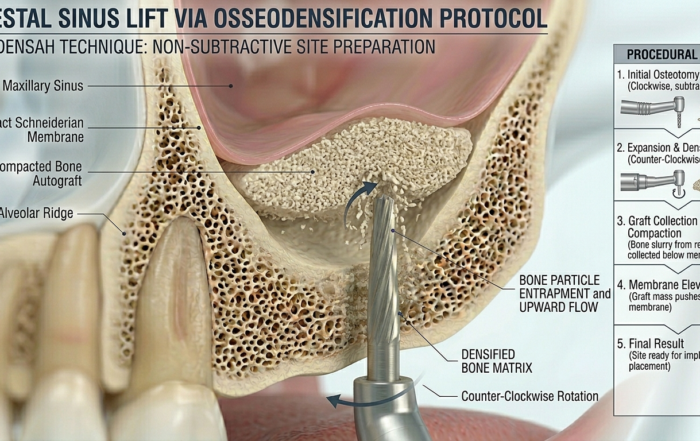
Latest Sinus Lifting Techniques in Modern Implant Dentistry
Latest Sinus Lifting Techniques in Modern Implant Dentistry A Comprehensive Clinical Review Introduction to Sinus Lifting in Implantology Sinus lifting, or maxillary sinus floor [...]
Biomechanics of the Triple Abutment & BOPiT Concept
Dental Biomechanics · Implant Science · Clinical Evidence Biomechanics of the Triple Abutment & BOPiT Concept How a saddle-shaped mathematical surface is rewriting the rules of load distribution [...]
The Woman Who Proved One Implant Could Hold Three Crowns
The Woman Who Proved One Implant Could Hold Three Crowns While the dental establishment looked away, Dr. Luciana Colepícolo spent 12 years building the [...]
ENPP1, The Molecular Brake That Limits Tissue Healing
ENPP1, The Molecular Brake That Limits Tissue Healing Introduction: A New Biological Barrier to Dental Regeneration Meet ENPP1—a protein most dentists have never heard [...]
The Rise of Self‑Healing Dental Biomaterials
The Rise of Self‑Healing Dental Biomaterials Introduction In modern restorative dentistry, durability and longevity of materials remain among the greatest clinical challenges. Traditional dental [...]
Water Fluoridation and IQ Scores in Offspring
Water Fluoridation and IQ Scores in Offspring Community water fluoridation has long been regarded as one of the most effective public health interventions for [...]