Truth About Fear of Broken Needles During Dental Anesthesia
Fear of a broken needle during dental anesthesia is a real concern for some patients, and even for some clinicians, though it’s extremely rare with modern dental practice. Here’s a breakdown of why this fear exists, its level of realism, and how to manage it.
🔍 Is Needle Breakage During Dental Anesthesia Common?
No. Needle breakage is very rare in current dental practice. Thanks to advances in:
Needle manufacturing (stronger, more flexible stainless steel)
Single-use disposable needles
Proper technique and training
The risk is extremely low, especially when the dentist uses the correct gauge, and length, and avoids bending the needle.
😨 Why Are Some Patients Scared of Needle Breakage?
Past traumatic stories (especially in older generations when reusable needles were common)
Social media or anecdotal reports of rare complications
Dental anxiety or needle phobia in general
Fear of losing control or being injured during the procedure
🧠 Psychological Impact
The fear of a broken needle may cause:
Elevated anxiety before injections
Resistance to dental treatment
Overreaction during anesthesia administration, which ironically increases the risk if a patient suddenly moves
✅ How Dentists Prevent Needle Breakage
Use the correct needle length and gauge (usually 25-30 gauge, depending on the injection)
Avoid bending the needle before injection
Never insert the needle to the hub (always leave part of the needle visible)
Instruct the patient to stay still and calm
Use gentle, controlled force
Replace needles when resistance is felt or after multiple uses (in rare multi-dose procedures)
💡 What If a Needle Breaks?
If it ever happens:
The fragment can usually be seen and retrieved surgically.
Rarely, if the fragment is deep or near vital structures, imaging (CBCT or X-ray) and surgical referral are necessary.
It’s not life-threatening but must be managed promptly.
💡 How to Reassure Patients
If you’re a clinician, here’s how to ease patient fears:
Educate gently: “Modern dental needles are very safe, and breakage is extremely rare—less than 1 in hundreds of thousands of injections.”
Explain your technique: Let them know you’re trained to prevent such issues.
Use calming techniques: Distraction, topical anesthetic gel, or even conscious sedation in high-anxiety cases.
Subscribe To Our Newsletter
Recent Articles
























Fear of a broken needle during dental anesthesia is a real concern for some patients, and even for some clinicians, though it’s extremely rare with modern dental practice. Here’s a breakdown of why this fear exists, its level of realism, and how to manage it.
🔍 Is Needle Breakage During Dental Anesthesia Common?
No. Needle breakage is very rare in current dental practice. Thanks to advances in:
Needle manufacturing (stronger, more flexible stainless steel)
Single-use disposable needles
Proper technique and training
The risk is extremely low, especially when the dentist uses the correct gauge, and length, and avoids bending the needle.
😨 Why Are Some Patients Scared of Needle Breakage?
Past traumatic stories (especially in older generations when reusable needles were common)
Social media or anecdotal reports of rare complications
Dental anxiety or needle phobia in general
Fear of losing control or being injured during the procedure
🧠 Psychological Impact
The fear of a broken needle may cause:
Elevated anxiety before injections
Resistance to dental treatment
Overreaction during anesthesia administration, which ironically increases the risk if a patient suddenly moves
✅ How Dentists Prevent Needle Breakage
Use the correct needle length and gauge (usually 25-30 gauge, depending on the injection)
Avoid bending the needle before injection
Never insert the needle to the hub (always leave part of the needle visible)
Instruct the patient to stay still and calm
Use gentle, controlled force
Replace needles when resistance is felt or after multiple uses (in rare multi-dose procedures)
💡 What If a Needle Breaks?
If it ever happens:
The fragment can usually be seen and retrieved surgically.
Rarely, if the fragment is deep or near vital structures, imaging (CBCT or X-ray) and surgical referral are necessary.
It’s not life-threatening but must be managed promptly.
💡 How to Reassure Patients
If you’re a clinician, here’s how to ease patient fears:
Educate gently: “Modern dental needles are very safe, and breakage is extremely rare—less than 1 in hundreds of thousands of injections.”
Explain your technique: Let them know you’re trained to prevent such issues.
Use calming techniques: Distraction, topical anesthetic gel, or even conscious sedation in high-anxiety cases.
Subscribe To Our Newsletter
Recent Articles
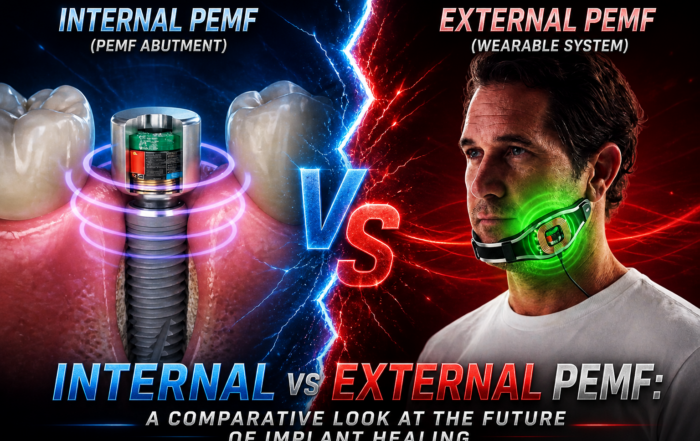
Pulsed Electromagnetic Field (PEMF) Use in Implant Dentistry
Pulsed Electromagnetic Field (PEMF) Use in Implant Dentistry Abstract and Historical Background Pulsed Electromagnetic Field (PEMF) therapy refers to the application of low-frequency electromagnetic [...]
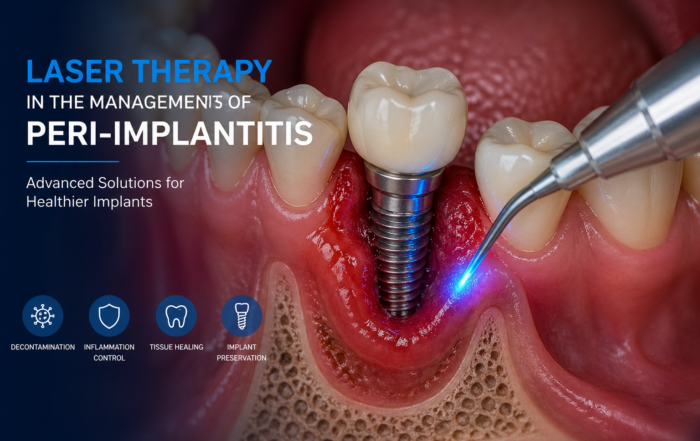
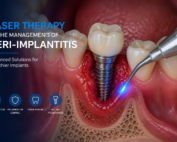
Laser Therapy in the Management of Peri-Implantitis
Laser Therapy in the Management of Peri-Implantitis Laser technology has become an increasingly valuable adjunct in the treatment of peri-implant diseases, particularly peri-implantitis. Its [...]
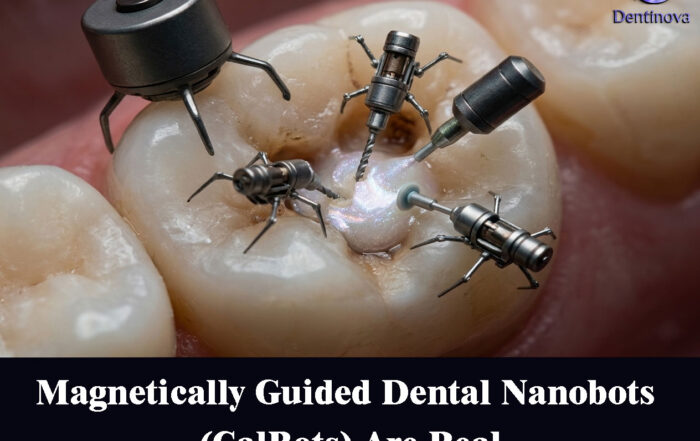
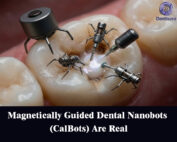
Magnetically Guided Dental Nanobots (CalBots) Are Real
Magnetically Guided Dental Nanobots (CalBots) Are Real The concept of nanobots in dentistry has long been associated with futuristic speculation. However, recent peer-reviewed research [...]
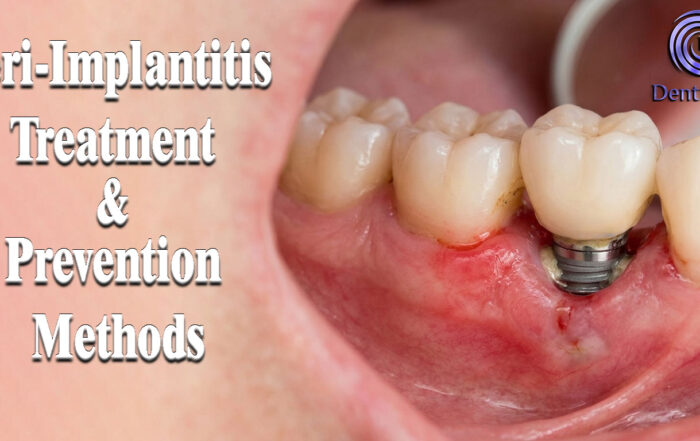
Peri-Implantitis Treatment & Prevention Methods
Peri-Implantitis Treatment & Prevention Methods Peri-implantitis remains one of the most significant biological complications affecting dental implants, posing a serious threat to long-term implant [...]
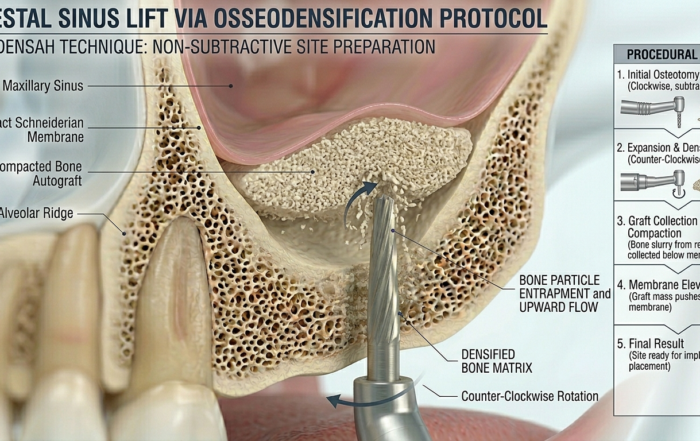
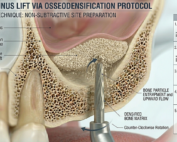
Latest Sinus Lifting Techniques in Modern Implant Dentistry
Latest Sinus Lifting Techniques in Modern Implant Dentistry A Comprehensive Clinical Review Introduction to Sinus Lifting in Implantology Sinus lifting, or maxillary sinus floor [...]

Biomechanics of the Triple Abutment & BOPiT Concept
Dental Biomechanics · Implant Science · Clinical Evidence Biomechanics of the Triple Abutment & BOPiT Concept How a saddle-shaped mathematical surface is rewriting the rules of load distribution [...]