Mclnnes Solution: A Powerful Underrated Dental Bleaching Formula
Mclnnes solution is a classic dental bleaching mixture used mainly to treat intrinsic enamel discoloration, such as dental fluorosis. Despite being an older technique, it remains a conservative and cost-effective option for many cases where modern peroxide whitening alone is ineffective. This article explains what Mclnnes solution is, how it works, the clinical technique, benefits, risks, alternatives, and evidence from studies.
Mclnnes solution is a classic dental bleaching mixture used mainly to treat intrinsic enamel discoloration, such as dental fluorosis. Despite being an older technique, it remains a conservative and cost-effective option for many cases where modern peroxide whitening alone is ineffective. This article explains what Mclnnes solution is, how it works, the clinical technique, benefits, risks, alternatives, and evidence from studies.
Composition and Background of Mclnnes solution
The original McInnes formula combines a strong oxidizer with an acid and a volatile solvent, classically, hydrogen peroxide, hydrochloric acid, and an anesthetic ether in a fixed ratio. That chemical mix produces a powerful topical bleaching agent that removes or reduces deep enamel stains by both oxidation of organic pigments and controlled surface demineralization that exposes less-stained substrate. Because of its strength, it must be prepared and applied by a dental professional only. Clinical reports and laboratory studies describe the formulation and its immediate whitening effect in fluorosis and certain developmental stains.
How Mclnnes solution works on fluorosis and intrinsic stains
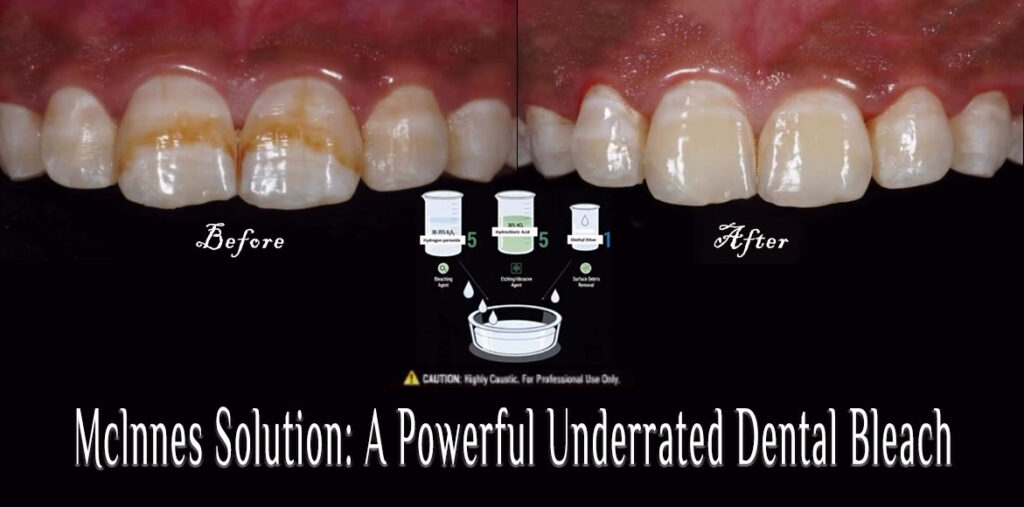
Fluorosis causes hypomineralized, porous enamel that traps pigments and displays chalky white, brown, or mottled areas. Mclnnes solution acts in two complementary ways: the peroxide oxidizes and breaks down pigmented molecules, while the hydrochloric acid component performs limited enamel microabrasion, removing a thin, stained surface layer. The net result is a faster, often dramatic color change compared with peroxide alone. However, this enamel alteration can slightly reduce surface microhardness, so many clinicians follow treatment with remineralizing agents and fluoride varnish. Laboratory and clinical papers have documented both the aesthetic benefits and measurable microhardness changes after McInnes application.
Preparation of McInnes Solution
The preparation of McInnes solution must be done with precision, using fresh, high-quality ingredients to ensure both safety and effectiveness. Traditionally, the classic formula consists of 30% hydrogen peroxide, 36% hydrochloric acid, and ethyl ether, commonly mixed in a ratio of 5:5:1. Because each component is chemically reactive—especially the high-concentration peroxide and strong acid—the solution must be prepared immediately before use in a controlled clinical setting. The dentist typically mixes the components in a glass container, using appropriate protective equipment such as gloves, eye protection, and proper ventilation. Ethyl ether, being highly volatile and flammable, requires careful handling and should never be stored near heat sources. Once mixed, the solution is applied promptly to avoid degradation of its bleaching potency. Importantly, McInnes solution is never pre-mixed for storage, as its stability decreases rapidly and the chemical reactions can become unsafe. Careful preparation ensures that the solution performs optimally while minimizing risks to both the clinician and the patient.
The Modified McInnes Solution
The Modified McInnes Solution was developed to address the drawbacks of the original formulation, particularly the aggressive enamel demineralization caused by concentrated hydrochloric acid. To create a safer and more tooth-friendly alternative, clinicians adopted a more alkaline ratio composed of 1 part 30% hydrogen peroxide, 1 part 20% sodium hydroxide (NaOH), and 1 part 0.2% ether (optional depending on the clinical protocol). This revised mixture maintains the strong oxidizing effect necessary for bleaching fluorosis stains while significantly reducing calcium loss from the enamel surface. As a result, it is considered equally effective for most cases but far less harsh on tooth structure, making it suitable for patients with thinner or more sensitive enamel. The trade-off, however, is that the modified formula may require a slightly longer application time to achieve the same whitening results. Still, its improved safety profile and lower risk of enamel contour alteration have made it a preferred choice for many modern practitioners.
Procedure: safe clinical steps and post-care
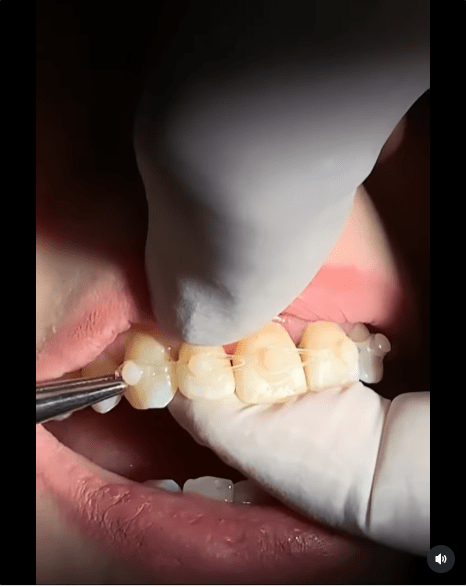
A safe McInnes treatment follows predictable steps: thorough diagnosis (severity, cause, and restorations), strict isolation (rubber dam to protect soft tissues), careful mixing immediately before use, timed application (short cycles of a few minutes), and copious rinsing between cycles. Many practitioners repeat short applications until the desired shade is reached, then apply fluoride or casein phosphopeptide-amorphous calcium phosphate (CPP-ACP) products to help restore surface minerals. Proper technique minimizes soft-tissue burns and reduces the risk of over-demineralization. Case series and in vivo studies emphasize the importance of isolation and post-treatment remineralization. :contentReference[oaicite:2]
Benefits of Dental Bleaching Using McInnes Solution
The primary benefit of dental bleaching using McInnes solution is its remarkable effectiveness in treating fluorosis-related discoloration, which is notoriously resistant to conventional whitening methods. Unlike over-the-counter whitening products or standard peroxide-based in-office bleaching, McInnes solution penetrates deeper into the hypomineralized enamel, breaking down long-standing stains through a combination of oxidation and controlled microabrasion. This makes it one of the few minimally invasive techniques capable of addressing moderate to severe enamel mottling without resorting to restorations like veneers or crowns. Another advantage is that it preserves most of the natural tooth structure, offering a more conservative approach for patients who want aesthetic improvement without drilling or enamel reduction. When followed by remineralization treatments, it can significantly enhance both the appearance and strength of enamel. Its affordability compared to cosmetic restorations also makes it an attractive option, especially in regions where veneers are costly or less accessible. Overall, the treatment offers a balance of efficiency, cost-effectiveness, and preservation of natural enamel that makes it a valuable tool in cosmetic dentistry.
Why Mclnnes Solution is Different ?
One of the reasons McInnes solution remains relevant today is its ability to provide significant results without requiring extensive tooth reduction, unlike veneers or crowns. Patients who are concerned about preserving natural tooth structure often prefer bleaching-based techniques before considering restorative options. McInnes solution offers a middle ground between simple whitening and more invasive cosmetic treatments. Its combination of chemical oxidation and superficial enamel removal can dramatically lighten mottled or brownish fluorosis stains that have existed for many years. Furthermore, because the technique focuses on improving the natural enamel rather than covering it, the final result often looks more life-like than restorative alternatives. When paired with modern remineralizing agents, the overall improvement in both color and enamel structure can be substantial, making the technique viable even in contemporary cosmetic dentistry settings.
Clinical evidence: what studies say about outcomes and safety
Multiple clinical case reports, case series, and in vitro investigations have evaluated McInnes solution. Clinical series report high patient satisfaction and quick esthetic improvement for mild-to-moderate fluorosis. In vitro studies confirm that McInnes application can lower enamel surface microhardness temporarily, which is why post-treatment remineralization strategies are recommended. Comparative clinical research finds McInnes effective and economical, but modern minimally invasive techniques (microabrasion, resin infiltration) are often considered alongside it, depending on lesion type. Overall, evidence supports McInnes as a useful tool in the clinician's armamentarium when used with appropriate precautions and follow-up.
Patient Selection for Successful Dental Bleaching Using Mclnenes Solution
Another important aspect of McInnes solution is the careful patient selection required to produce successful results. Not every type of enamel discoloration responds equally well to this method. For example, intrinsic stains caused by medications such as tetracycline require different approaches, as the discoloration lies deeper within the tooth structure. In contrast, fluorosis-related stains typically occur within the superficial to mid-enamel layers, making them ideal for McInnes treatment. The dentist must evaluate enamel thickness, presence of sensitivity, lesion depth, and previous whitening attempts before choosing this protocol. Additionally, patient expectations must be managed realistically; while McInnes solution can significantly improve the appearance of fluorosed teeth, it may not produce a "perfect white" shade in severe cases. Clear communication, combined with follow-up remineralization and enamel protection, ensures long-term success and high patient satisfaction.
Limitations of Using McInnes Solution
Despite its demonstrated effectiveness, McInnes solution has several important limitations that restrict its use to carefully selected cases. The mixture contains strong acidic and oxidizing components, meaning improper application can lead to enamel erosion, increased sensitivity, or chemical burns to surrounding soft tissues. As a result, it must only be applied by an experienced dentist using strict isolation protocols. Additionally, McInnes solution is not effective for all types of intrinsic discoloration. Stains caused by tetracycline, trauma, or genetic enamel defects often lie too deep within the dentin, rendering McInnes treatment insufficient or unpredictable. In severe cases of fluorosis with pitted or structurally compromised enamel, bleaching alone cannot restore aesthetic uniformity, and restorative options like resin infiltration, composite veneers, or porcelain veneers become necessary. Another limitation is that multiple sessions may be needed, and results can vary depending on enamel thickness and stain depth. Furthermore, patients with pre-existing sensitivity, thin enamel, or large restorations may not be suitable candidates. For these reasons, McInnes solution remains a powerful but technique-sensitive treatment that must be used judiciously to avoid complications and ensure predictable outcomes.
Alternatives to Mclnnes solution: when to choose other treatments
Modern alternatives include in-office high-concentration peroxide bleaching (with light activation when indicated), enamel microabrasion, resin infiltration (to mask white lesions), composite bonding, or porcelain veneers for severe cases. For mild fluorosis, microabrasion combined with peroxide whitening often achieves excellent esthetic results with less chemical aggressiveness. Resin infiltration is particularly useful for white-spot lesions because it infiltrates porous enamel with low-viscosity resin, reducing contrast without removing structure. A dentist will balance severity, patient age, enamel integrity, budget and long-term expectations when recommending McInnes solution versus alternatives.
References
- Parinitha S, Hegde S. Effect of Power Bleaching on the Fluorosis Stained Anterior Teeth — Case Series. (Describes McInnes formula, technique and clinical outcomes). :contentReference[oaicite:6]
- Darshan H.E., et al. The effect of McInnes solution on enamel and the effect of Tooth Mousse on bleached enamel: An in-vitro study. (Assessed enamel microhardness after McInnes and benefits of remineralization). :contentReference[oaicite:7]
- Bharath KP, et al. Comparison of relative efficacy of enamel microabrasion and McInnes bleaching for fluorosed teeth. Journal paper comparing techniques and postoperative sensitivity.
FAQ
1. Is Mclnnes solution safe for everyone?
No, it is safe when performed by a trained dentist with proper isolation and follow-up remineralization. It is contraindicated in teeth with severe structural loss, uncontrolled sensitivity, or where restorations would be compromised.
2. How many sessions are usually needed?
Many cases require 1–3 short application sessions. The exact number depends on stain depth and desired shade; clinicians often repeat 2–5 minute cycles during a visit and may ask for follow-ups.
3. Will Mclnnes solution damage my enamel permanently?
When used correctly the enamel alteration is minimal and reversible with remineralization protocols (fluoride varnish, CPP-ACP). Laboratory studies show temporary reductions in microhardness that can be managed clinically. :contentReference[oaicite:9]
4. Can children receive McInnes treatment?
For adolescents with fluorosis, McInnes may be an option if the enamel structure is adequate; however, conservative alternatives like microabrasion are commonly preferred, and a dentist will assess risk vs benefit.
5. How long do results last?
Results are usually long-lasting if the underlying cause (eg, excessive fluoride exposure) is addressed and good oral hygiene is maintained. Some relapse or staining can occur, and touch-up treatments or alternative restorations may be needed later.
6. How does Mclnnes solution compare with veneers?
McInnes is far less invasive and cheaper than veneers; it preserves natural tooth structure and is suitable for many intrinsic stains. Veneers offer more predictable, permanent cosmetic correction for severe defects but require enamel removal and a higher cost.
Recent Articles
















Mclnnes solution is a classic dental bleaching mixture used mainly to treat intrinsic enamel discoloration, such as dental fluorosis. Despite being an older technique, it remains a conservative and cost-effective option for many cases where modern peroxide whitening alone is ineffective. This article explains what Mclnnes solution is, how it works, the clinical technique, benefits, risks, alternatives, and evidence from studies.
Mclnnes solution is a classic dental bleaching mixture used mainly to treat intrinsic enamel discoloration, such as dental fluorosis. Despite being an older technique, it remains a conservative and cost-effective option for many cases where modern peroxide whitening alone is ineffective. This article explains what Mclnnes solution is, how it works, the clinical technique, benefits, risks, alternatives, and evidence from studies.
Composition and Background of Mclnnes solution
The original McInnes formula combines a strong oxidizer with an acid and a volatile solvent, classically, hydrogen peroxide, hydrochloric acid, and an anesthetic ether in a fixed ratio. That chemical mix produces a powerful topical bleaching agent that removes or reduces deep enamel stains by both oxidation of organic pigments and controlled surface demineralization that exposes less-stained substrate. Because of its strength, it must be prepared and applied by a dental professional only. Clinical reports and laboratory studies describe the formulation and its immediate whitening effect in fluorosis and certain developmental stains.
How Mclnnes solution works on fluorosis and intrinsic stains
Fluorosis causes hypomineralized, porous enamel that traps pigments and displays chalky white, brown, or mottled areas. Mclnnes solution acts in two complementary ways: the peroxide oxidizes and breaks down pigmented molecules, while the hydrochloric acid component performs limited enamel microabrasion, removing a thin, stained surface layer. The net result is a faster, often dramatic color change compared with peroxide alone. However, this enamel alteration can slightly reduce surface microhardness, so many clinicians follow treatment with remineralizing agents and fluoride varnish. Laboratory and clinical papers have documented both the aesthetic benefits and measurable microhardness changes after McInnes application.
Preparation of McInnes Solution
The preparation of McInnes solution must be done with precision, using fresh, high-quality ingredients to ensure both safety and effectiveness. Traditionally, the classic formula consists of 30% hydrogen peroxide, 36% hydrochloric acid, and ethyl ether, commonly mixed in a ratio of 5:5:1. Because each component is chemically reactive, especially the high-concentration peroxide and strong acid, the solution must be prepared immediately before use in a controlled clinical setting. The dentist typically mixes the components in a glass container, using appropriate protective equipment such as gloves, eye protection, and proper ventilation. Ethyl ether, being highly volatile and flammable, requires careful handling and should never be stored near heat sources. Once mixed, the solution is applied promptly to avoid degradation of its bleaching potency. Importantly, McInnes solution is never pre-mixed for storage, as its stability decreases rapidly and the chemical reactions can become unsafe. Careful preparation ensures that the solution performs optimally while minimizing risks to both the clinician and the patient.
The Modified McInnes Solution
The Modified McInnes Solution was developed to address the drawbacks of the original formulation, particularly the aggressive enamel demineralization caused by concentrated hydrochloric acid. To create a safer and more tooth-friendly alternative, clinicians adopted a more alkaline ratio composed of 1 part 30% hydrogen peroxide, 1 part 20% sodium hydroxide (NaOH), and 1 part 0.2% ether (optional depending on the clinical protocol). This revised mixture maintains the strong oxidizing effect necessary for bleaching fluorosis stains while significantly reducing calcium loss from the enamel surface. As a result, it is considered equally effective for most cases but far less harsh on tooth structure, making it suitable for patients with thinner or more sensitive enamel. The trade-off, however, is that the modified formula may require a slightly longer application time to achieve the same whitening results. Still, its improved safety profile and lower risk of enamel contour alteration have made it a preferred choice for many modern practitioners.
Procedure: safe clinical steps and post-care
A safe McInnes treatment follows predictable steps: thorough diagnosis (severity, cause, and restorations), strict isolation (rubber dam to protect soft tissues), careful mixing immediately before use, timed application (short cycles of a few minutes), and copious rinsing between cycles. Many practitioners repeat short applications until the desired shade is reached, then apply fluoride or casein phosphopeptide-amorphous calcium phosphate (CPP-ACP) products to help restore surface minerals. Proper technique minimizes soft-tissue burns and reduces the risk of over-demineralization. Case series and in vivo studies emphasize the importance of isolation and post-treatment remineralization.
Benefits of Dental Bleaching Using McInnes Solution
The primary benefit of dental bleaching using McInnes solution is its remarkable effectiveness in treating fluorosis-related discoloration, which is notoriously resistant to conventional whitening methods. Unlike over-the-counter whitening products or standard peroxide-based in-office bleaching, McInnes solution penetrates deeper into the hypomineralized enamel, breaking down long-standing stains through a combination of oxidation and controlled microabrasion. This makes it one of the few minimally invasive techniques capable of addressing moderate to severe enamel mottling without resorting to restorations like veneers or crowns. Another advantage is that it preserves most of the natural tooth structure, offering a more conservative approach for patients who want aesthetic improvement without drilling or enamel reduction. When followed by remineralization treatments, it can significantly enhance both the appearance and strength of enamel. Its affordability compared to cosmetic restorations also makes it an attractive option, especially in regions where veneers are costly or less accessible. Overall, the treatment offers a balance of efficiency, cost-effectiveness, and preservation of natural enamel that makes it a valuable tool in cosmetic dentistry.
Why Mclnnes Solution is Different ?
One of the reasons McInnes solution remains relevant today is its ability to provide significant results without requiring extensive tooth reduction, unlike veneers or crowns. Patients who are concerned about preserving natural tooth structure often prefer bleaching-based techniques before considering restorative options. McInnes solution offers a middle ground between simple whitening and more invasive cosmetic treatments. Its combination of chemical oxidation and superficial enamel removal can dramatically lighten mottled or brownish fluorosis stains that have existed for many years. Furthermore, because the technique focuses on improving the natural enamel rather than covering it, the final result often looks more life-like than restorative alternatives. When paired with modern remineralizing agents, the overall improvement in both color and enamel structure can be substantial, making the technique viable even in contemporary cosmetic dentistry settings.
Clinical evidence: what studies say about outcomes and safety
Multiple clinical case reports, case series, and in vitro investigations have evaluated McInnes solution. Clinical series report high patient satisfaction and quick aesthetic improvement for mild-to-moderate fluorosis. In vitro studies confirm that McInnes application can lower enamel surface microhardness temporarily, which is why post-treatment remineralization strategies are recommended. Comparative clinical research finds McInnes effective and economical, but modern minimally invasive techniques (microabrasion, resin infiltration) are often considered alongside it, depending on lesion type. Overall, evidence supports McInnes as a useful tool in the clinician's armamentarium when used with appropriate precautions and follow-up.
Patient Selection for Successful Dental Bleaching Using Mclnenes Solution
Another important aspect of McInnes solution is the careful patient selection required to produce successful results. Not every type of enamel discoloration responds equally well to this method. For example, intrinsic stains caused by medications such as tetracycline require different approaches, as the discoloration lies deeper within the tooth structure. In contrast, fluorosis-related stains typically occur within the superficial to mid-enamel layers, making them ideal for McInnes treatment. The dentist must evaluate enamel thickness, presence of sensitivity, lesion depth, and previous whitening attempts before choosing this protocol. Additionally, patient expectations must be managed realistically; while McInnes solution can significantly improve the appearance of fluorosed teeth, it may not produce a "perfect white" shade in severe cases. Clear communication, combined with follow-up remineralization and enamel protection, ensures long-term success and high patient satisfaction.
Limitations of Using McInnes Solution
Despite its demonstrated effectiveness, McInnes solution has several important limitations that restrict its use to carefully selected cases. The mixture contains strong acidic and oxidizing components, meaning improper application can lead to enamel erosion, increased sensitivity, or chemical burns to surrounding soft tissues. As a result, it must only be applied by an experienced dentist using strict isolation protocols. Additionally, McInnes solution is not effective for all types of intrinsic discoloration. Stains caused by tetracycline, trauma, or genetic enamel defects often lie too deep within the dentin, rendering McInnes treatment insufficient or unpredictable. In severe cases of fluorosis with pitted or structurally compromised enamel, bleaching alone cannot restore aesthetic uniformity, and restorative options like resin infiltration, composite veneers, or porcelain veneers become necessary. Another limitation is that multiple sessions may be needed, and results can vary depending on enamel thickness and stain depth. Furthermore, patients with pre-existing sensitivity, thin enamel, or large restorations may not be suitable candidates. For these reasons, McInnes solution remains a powerful but technique-sensitive treatment that must be used judiciously to avoid complications and ensure predictable outcomes.
Alternatives to Mclnnes solution: when to choose other treatments
Modern alternatives include in-office high-concentration peroxide bleaching (with light activation when indicated), enamel microabrasion, resin infiltration (to mask white lesions), composite bonding, or porcelain veneers for severe cases. For mild fluorosis, microabrasion combined with peroxide whitening often achieves excellent esthetic results with less chemical aggressiveness. Resin infiltration is particularly useful for white-spot lesions because it infiltrates porous enamel with low-viscosity resin, reducing contrast without removing structure. A dentist will balance severity, patient age, enamel integrity, budget and long-term expectations when recommending McInnes solution versus alternatives.
References
- Parinitha S, Hegde S. Effect of Power Bleaching on the Fluorosis Stained Anterior Teeth — Case Series. (Describes McInnes formula, technique and clinical outcomes). :contentReference[oaicite:6]
- Darshan H.E., et al. The effect of McInnes solution on enamel and the effect of Tooth Mousse on bleached enamel: An in-vitro study. (Assessed enamel microhardness after McInnes and benefits of remineralization). :contentReference[oaicite:7]
- Bharath KP, et al. Comparison of relative efficacy of enamel microabrasion and McInnes bleaching for fluorosed teeth. Journal paper comparing techniques and postoperative sensitivity. :contentReference[oaicite:8]
FAQ
1. Is Mclnnes solution safe for everyone?
No, it is safe when performed by a trained dentist with proper isolation and follow-up remineralization. It is contraindicated in teeth with severe structural loss, uncontrolled sensitivity, or where restorations would be compromised.
2. How many sessions are usually needed?
Many cases require 1–3 short application sessions. The exact number depends on stain depth and desired shade; clinicians often repeat 2–5 minute cycles during a visit and may ask for follow-ups.
3. Will Mclnnes solution damage my enamel permanently?
When used correctly the enamel alteration is minimal and reversible with remineralization protocols (fluoride varnish, CPP-ACP). Laboratory studies show temporary reductions in microhardness that can be managed clinically. :contentReference[oaicite:9]
4. Can children receive McInnes treatment?
For adolescents with fluorosis, McInnes may be an option if the enamel structure is adequate; however, conservative alternatives like microabrasion are commonly preferred, and a dentist will assess risk vs benefit.
5. How long do results last?
Results are usually long-lasting if the underlying cause (eg, excessive fluoride exposure) is addressed and good oral hygiene is maintained. Some relapse or staining can occur, and touch-up treatments or alternative restorations may be needed later.
6. How does Mclnnes solution compare with veneers?
McInnes is far less invasive and cheaper than veneers; it preserves natural tooth structure and is suitable for many intrinsic stains. Veneers offer more predictable, permanent cosmetic correction for severe defects but require enamel removal and a higher cost.