Woman’s Hearing Restored By Routine Dental Implant Surgery
In a medical revelation that’s capturing global attention, a 63-year-old woman from Kosamba in India has regained her hearing “nearly two decades after losing it” following a routine dental implant surgery procedure. What happened next defied expectations and has opened new horizons in interdisciplinary health research.
A Life in Silent Isolation Changed By Dental Implant Surgery
For close to 20 years, Jaibunnisha M lived in near-total silence. Despite using high-quality hearing aids, her auditory impairment worsened over the last decade to the point where even these aids failed. Social gatherings, family interactions, and everyday community life became sources of anxiety rather than joy. Locals mistakenly assumed she had become aloof or withdrawn—when in reality, she was simply unable to hear them.
An Unexpected Turn at the Dentist
Clinically, dental implants are common orthodontic procedures intended to restore functionality and aesthetics, not hearing. Yet, following her dental implant surgery, Jaibunnisha regained her hearing. The audiological transformation was nothing short of miraculous, and even the attending ENT specialists were stunned.
Why This Dental Implant Surgery Outcome Is So Extraordinary
This case is not just rare, it’s unprecedented, and for a host of reasons:
Direct Relation Is Uncommon
Dental treatments seldom, if ever, intersect with hearing improvement. This case challenges conventional wisdom about how different body systems might interact unexpectedly.Decades-Long Deafness Overcome
Regaining hearing after such a prolonged period of auditory deprivation is nearly unheard of. Most treatments aim to improve partial losses, not restore hearing that has been compromised for decades.No Reported Mechanism Yet
Researchers and clinicians are still trying to understand how a dental implant could trigger an auditory restoration. Is it neural stimulation? Circulatory changes? A biomechanical trigger? The medical community is eager to find out.
A Surprising Connection Between Dental Implant Surgery and Hearing Restoration
In a story that has stunned both the dental and medical communities, a 63-year-old woman who had endured severe hearing loss for more than two decades experienced an unexpected recovery — not after an ear procedure, but following routine dental implant surgery. Initially, doctors had planned a cochlear implant to help her regain partial hearing. However, during her dental treatment, which included nerve decompression, something extraordinary happened: within weeks, her hearing returned, clear and natural, without the aid of hearing devices.
How Could This Happen?
Experts believe the answer may lie in the intricate relationship between the jaw, nerves, and auditory system. Nerve decompression performed during the dental procedure could have relieved pressure on certain cranial nerves that influence hearing. The jaw — particularly the temporomandibular joint (TMJ) — along with the sinuses and oral cavity, shares close anatomical and neurological connections with the ear. This means changes or interventions in the jaw can sometimes have surprising effects on auditory function.
What This Dental Implant Surgery Case Reveals About Oral Health
While this single case doesn’t prove a universal treatment for hearing loss, it does highlight an important message: oral health and hearing health are more closely linked than most people realize. From nerve pathways to shared structures, the jaw and ear work in harmony more often than we think. This woman’s story serves as a powerful reminder that what happens in the mouth can, quite literally, echo into the ears.
Implications for Medicine and Dental Implant Surgery
If this case is more than a coincidence, it has the potential to transform interdisciplinary collaboration:
Future Clinical Trials: Research might explore neurosensory responses to oral-implant procedures.
Clinical Protocols: Dentists could be trained to monitor unexpected sensory outcomes.
Patient Testing: Patients with unexplained sensory shifts post-implant might receive follow-up diagnostics earlier.
Wider Health Benefits of Restored Hearing
The benefits of regaining hearing are not limited to sound—they extend to social, psychological, and cognitive realms:
Reduced Loneliness & Social Isolation
Improved hearing fosters more social engagement and quality of life, BioMed Central.Enhanced Cognitive Function
Studies show cochlear implants can improve memory processing speed and working memory in older adults, even years after implantation MDPIPMC.Greater Independence
Improved auditory function often leads to better self-care, phone use, and phone-based independence, BioMed Central.Mental Health Gains
Less depression and cognitive decline have been linked to improved auditory input from implants, PMCWikipedia.
Looking Ahead: Caution with Curiosity
Despite the excitement, experts urge caution:
Isolated Incident vs. Pattern?
One case doesn’t mean a common effect—this may remain a remarkable exception.Ethical Research Required
Any follow-up studies must prioritize patient safety, transparency, and informed consent.Multidisciplinary Input Needed
Otorhinolaryngologists, neurologists, and dental specialists must collaborate—clearly defining study methods and outcomes.
Conclusion
“Hearing Accidentally Restored After Implant Placement” is not just a headline—it’s a reminder that medicine is constantly evolving, and the human body still holds surprises. Jaibunnisha’s experience shines a hopeful light on the potential for cross-disciplinary breakthroughs where least expected.
Whether this becomes a catalyst for more research or remains an extraordinary moment in medical history, it amplifies one message: never underestimate the unexpected power of human healing.
Source:
Recent Articles

















In a medical revelation that’s capturing global attention, a 63-year-old woman from Kosamba in India has regained her hearing “nearly two decades after losing it” following a routine dental implant surgery procedure. What happened next defied expectations and has opened new horizons in interdisciplinary health research.
A Life in Silent Isolation Changed By Dental Implant Surgery
For close to 20 years, Jaibunnisha M lived in near-total silence. Despite using high-quality hearing aids, her auditory impairment worsened over the last decade to the point where even these aids failed. Social gatherings, family interactions, and everyday community life became sources of anxiety rather than joy. Locals mistakenly assumed she had become aloof or withdrawn—when in reality, she was simply unable to hear them.
An Unexpected Turn at the Dentist
Clinically, dental implants are common orthodontic procedures intended to restore functionality and aesthetics, not hearing. Yet, following her dental implant surgery, Jaibunnisha regained her hearing. The audiological transformation was nothing short of miraculous, and even the attending ENT specialists were stunned.
Why This Dental Implant Surgery Outcome Is So Extraordinary
This case is not just rare, it’s unprecedented, and for a host of reasons:
Direct Relation Is Uncommon
Dental treatments seldom, if ever, intersect with hearing improvement. This case challenges conventional wisdom about how different body systems might interact unexpectedly.Decades-Long Deafness Overcome
Regaining hearing after such a prolonged period of auditory deprivation is nearly unheard of. Most treatments aim to improve partial losses, not restore hearing that has been compromised for decades.No Reported Mechanism Yet
Researchers and clinicians are still trying to understand how a dental implant could trigger an auditory restoration. Is it neural stimulation? Circulatory changes? A biomechanical trigger? The medical community is eager to find out.
A Surprising Connection Between Dental Implant Surgery and Hearing Restoration
In a story that has stunned both the dental and medical communities, a 63-year-old woman who had endured severe hearing loss for more than two decades experienced an unexpected recovery — not after an ear procedure, but following routine dental implant surgery. Initially, doctors had planned a cochlear implant to help her regain partial hearing. However, during her dental treatment, which included nerve decompression, something extraordinary happened: within weeks, her hearing returned, clear and natural, without the aid of hearing devices.
How Could This Happen?
Experts believe the answer may lie in the intricate relationship between the jaw, nerves, and auditory system. Nerve decompression performed during the dental procedure could have relieved pressure on certain cranial nerves that influence hearing. The jaw — particularly the temporomandibular joint (TMJ) — along with the sinuses and oral cavity, shares close anatomical and neurological connections with the ear. This means changes or interventions in the jaw can sometimes have surprising effects on auditory function.
What This Dental Implant Surgery Case Reveals About Oral Health
While this single case doesn’t prove a universal treatment for hearing loss, it does highlight an important message: oral health and hearing health are more closely linked than most people realize. From nerve pathways to shared structures, the jaw and ear work in harmony more often than we think. This woman’s story serves as a powerful reminder that what happens in the mouth can, quite literally, echo into the ears.
Implications for Medicine and Dental Implant Surgery
If this case is more than a coincidence, it has the potential to transform interdisciplinary collaboration:
Future Clinical Trials: Research might explore neurosensory responses to oral-implant procedures.
Clinical Protocols: Dentists could be trained to monitor unexpected sensory outcomes.
Patient Testing: Patients with unexplained sensory shifts post-implant might receive follow-up diagnostics earlier.
Wider Health Benefits of Restored Hearing
The benefits of regaining hearing are not limited to sound—they extend to social, psychological, and cognitive realms:
Reduced Loneliness & Social Isolation
Improved hearing fosters more social engagement and quality of life, BioMed Central.Enhanced Cognitive Function
Studies show cochlear implants can improve memory processing speed and working memory in older adults, even years after implantation MDPIPMC.Greater Independence
Improved auditory function often leads to better self-care, phone use, and phone-based independence, BioMed Central.Mental Health Gains
Less depression and cognitive decline have been linked to improved auditory input from implants, PMCWikipedia.
Looking Ahead: Caution with Curiosity
Despite the excitement, experts urge caution:
Isolated Incident vs. Pattern?
One case doesn’t mean a common effect—this may remain a remarkable exception.Ethical Research Required
Any follow-up studies must prioritize patient safety, transparency, and informed consent.Multidisciplinary Input Needed
Otorhinolaryngologists, neurologists, and dental specialists must collaborate—clearly defining study methods and outcomes.
Conclusion
“Hearing Accidentally Restored After Implant Placement” is not just a headline—it’s a reminder that medicine is constantly evolving, and the human body still holds surprises. Jaibunnisha’s experience shines a hopeful light on the potential for cross-disciplinary breakthroughs where least expected.
Whether this becomes a catalyst for more research or remains an extraordinary moment in medical history, it amplifies one message: never underestimate the unexpected power of human healing.
Source:
Recent Articles
Peri-Implantitis Treatment & Prevention Methods
Peri-Implantitis Treatment & Prevention Methods Peri-implantitis remains one of the most significant biological complications affecting dental implants, posing a serious threat to long-term implant [...]
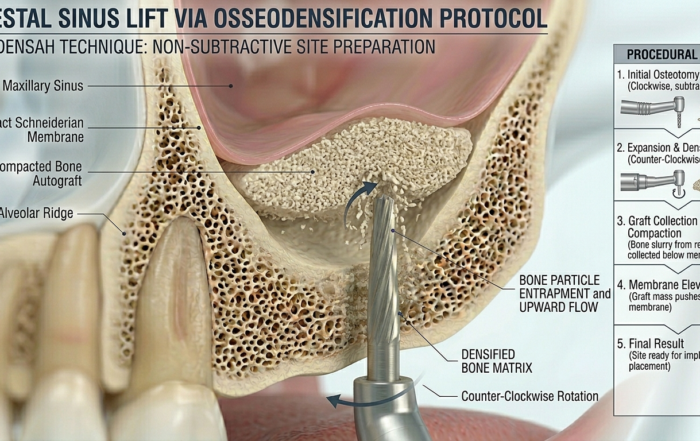
Latest Sinus Lifting Techniques in Modern Implant Dentistry
Latest Sinus Lifting Techniques in Modern Implant Dentistry A Comprehensive Clinical Review Introduction to Sinus Lifting in Implantology Sinus lifting, or maxillary sinus floor [...]
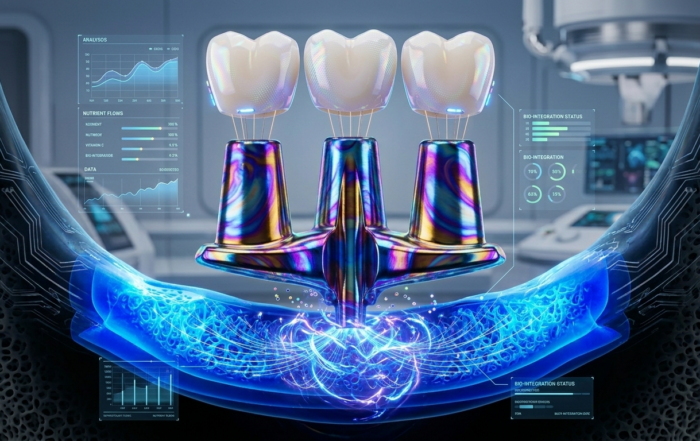
Biomechanics of the Triple Abutment & BOPiT Concept
Dental Biomechanics · Implant Science · Clinical Evidence Biomechanics of the Triple Abutment & BOPiT Concept How a saddle-shaped mathematical surface is rewriting the rules of load distribution [...]
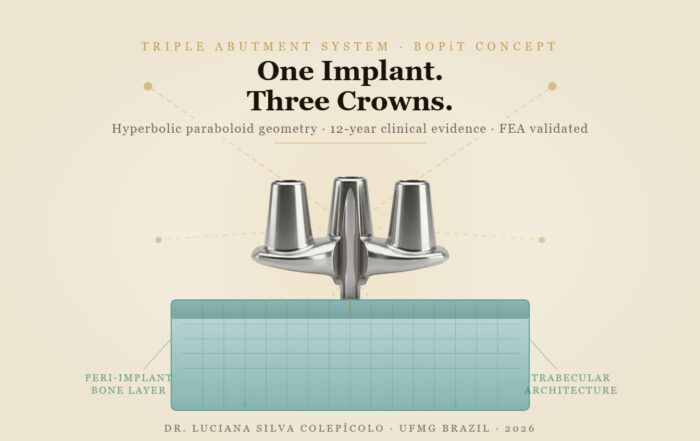
The Woman Who Proved One Implant Could Hold Three Crowns
The Woman Who Proved One Implant Could Hold Three Crowns While the dental establishment looked away, Dr. Luciana Colepícolo spent 12 years building the [...]
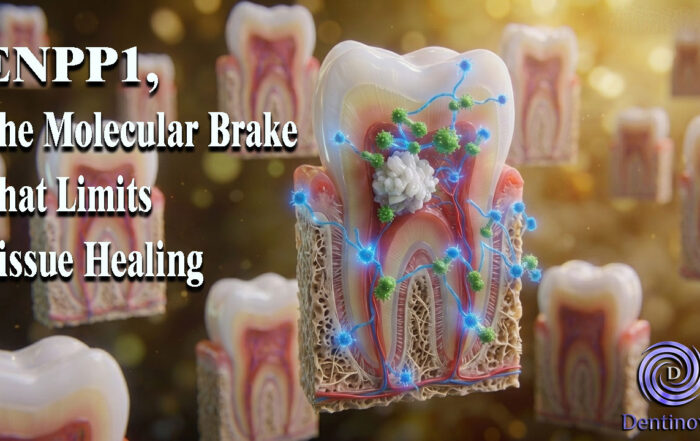
ENPP1, The Molecular Brake That Limits Tissue Healing
ENPP1, The Molecular Brake That Limits Tissue Healing Introduction: A New Biological Barrier to Dental Regeneration Meet ENPP1—a protein most dentists have never heard [...]
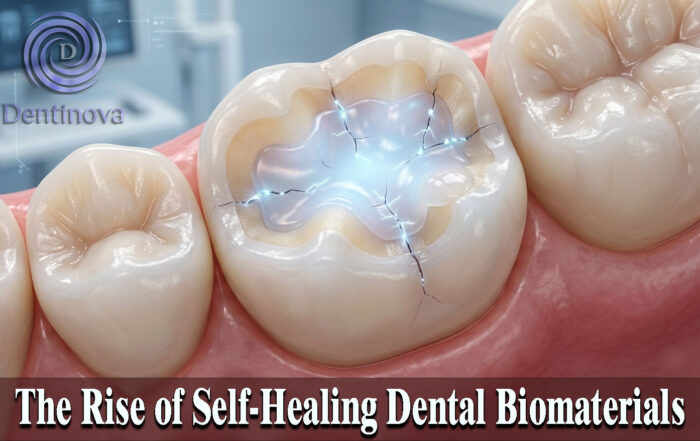
The Rise of Self‑Healing Dental Biomaterials
The Rise of Self‑Healing Dental Biomaterials Introduction In modern restorative dentistry, durability and longevity of materials remain among the greatest clinical challenges. Traditional dental [...]