Meet The MouthPad, A Tongue‑Controlled Device For Paralyzed Users
In recent years, advancements in assistive technology have dramatically transformed how individuals with physical impairments interact with the digital world. One of the most groundbreaking innovations in this realm is the tongue‑controlled device known as the MouthPad. Designed to give users with paralysis unprecedented control over phones, tablets, and computers, the MouthPad is challenging traditional notions of human‑tech interaction and accessibility. This article examines the technology, its development, real‑world impact, and future potential.
What Is the MouthPad: A Revolutionary Tongue‑Controlled Device
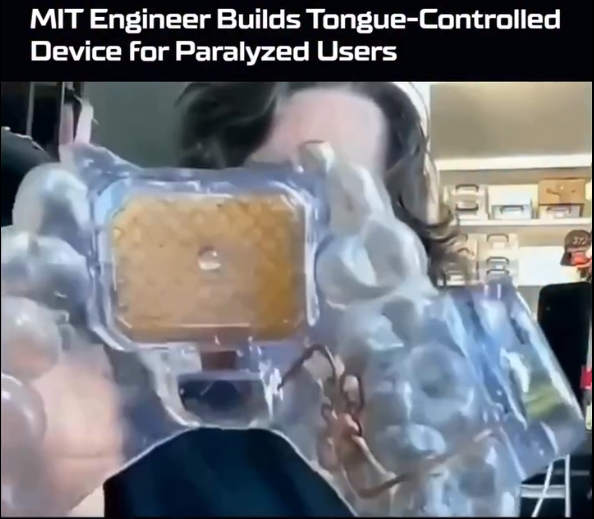
The MouthPad is an intraoral interface developed by Augmental, a startup spun out of the Massachusetts Institute of Technology’s Media Lab. This tongue‑controlled device looks like a thin, custom‑fit retainer that sits comfortably on the roof of the mouth and uses the natural agility of the tongue and head gestures to control digital interfaces. Rather than relying on traditional input methods like touchscreens and physical mice — which are inaccessible for many users with paralysis — the MouthPad translates subtle tongue and head movements into precise cursor control and clicking actions via Bluetooth connectivity. news.mit.edu+1
By converting these movements into commands that computers and smartphones understand, this tongue‑controlled device unlocks a direct, hands‑free mode of interaction. For people who have lost hand function due to spinal cord injuries or neurological conditions, this accessibility tool offers not just interaction but independence. news.mit.edu
The Science Behind the Tongue‑Controlled Device
The concept of the MouthPad is rooted in the remarkable neuromuscular structure of the human tongue, which contains eight distinct muscles and primarily slow‑twitch fibers that minimize fatigue during prolonged use. This makes it particularly suited for precise and sustained interaction without tiring easily. news.mit.edu
The MouthPad combines a pressure‑sensitive touchpad with motion sensors to detect and interpret tongue gestures along multiple axes. Users can slide their tongue to scroll or steer the cursor, perform left clicks with palate presses, and generate right clicks via sipping gestures. For users who have limited tongue dexterity, the system supports alternative gestures such as bites or neck movement‑based head tracking. Medical Xpress
The technology is also customizable: Augmental creates each MouthPad using a 3D scan of the user’s dental structure, then fabricates the device with dental‑grade materials and integrated electronics. This results in a personalized fit that maximizes comfort and usability. news.mit.edu
Real‑World Impact: Independence Through a Tongue‑Controlled Device
For individuals living with paralysis, the MouthPad has moved beyond concept into meaningful everyday use. People with spinal cord injuries and quadriplegia are already using the device to navigate their favorite digital tools independently — from writing emails and taking notes to participating in online classes and social interactions. SciTechDaily
One early adopter, a college student with quadriplegia studying mathematics and computer science, reported that the MouthPad allows her to write math formulas and engage with academic material in ways that speech‑based systems simply could not support effectively. Her experience illustrates how a tongue‑controlled device bridges gaps left by existing assistive technologies. news.mit.edu
Parents and caregivers have echoed this sentiment, describing the MouthPad as “the most significant moment since the injury” for their loved ones. The device’s ability to support up to nine hours of daily use demonstrates its potential for integration into routine life activities. news.mit.edu
Development, Recognition, and Industry Response
The inventor of the MouthPad, Tomás Vega, co‑founded Augmental after earning a graduate degree from MIT’s Fluid Interfaces group. His early fascination with assistive tech and human augmentation led to prototype experiments that eventually evolved into the commercial‑grade MouthPad product. news.mit.edu
The innovation has attracted recognition beyond academic circles. The MouthPad has received awards such as the Grand Prix in Innovation and Silver in Health + Wellness at the Cannes Lions Awards, validating its design impact and potential for social good. It has also been honored at the Core77 Design Awards and recognized among standout emerging technologies. media.mit.edu+1
Industry interest has followed. Augmental showcased the MouthPad at major technology venues and earned accolades for best pitch at events like CES 2024, highlighting both the commercial and social promise of this tongue‑controlled device. media.mit.edu
Technical Capabilities and User Experience of The MouthPad
From a user experience perspective, the MouthPad integrates smoothly with most modern operating systems and digital devices. It pairs wirelessly with computers, tablets, and phones, functioning similarly to a Bluetooth mouse — but instead of hand movement, it translates tongue and head gestures into cursor position and actions. augmental.tech
Users can switch between tongue‑based inputs and head tracking depending on personal comfort and mobility capabilities. This multimodal design adds flexibility, accommodating users with a range of physical conditions. Independent usage reports suggest that users can perform click‑and‑drag, scrolling, right and left clicks, and precise cursor placement once the system calibration is complete. augmental.tech
Moreover, the MouthPad is designed to be discreet and unobtrusive, allowing users to speak and interact normally while wearing the device. Its integration into daily life supports both functional productivity and social engagement without drawing undue attention. augmental.tech
Future Outlook for Tongue‑Controlled Devices in Accessibility
While the current generation of the MouthPad already represents a significant leap forward, Augmental’s roadmap extends further. The company is working toward U.S. Food and Drug Administration (FDA) clearance, which would broaden clinical adoption, unlock insurance reimbursement pathways, and facilitate wider distribution. news.mit.edu
Future iterations may expand into silent speech recognition, capturing subtle internal oral movements to interpret intended speech — a feature that could benefit users with impaired lung function or those unable to vocalize traditionally. TechCrunch
Additionally, the integration of this technology with emerging AI and robotics platforms could enable users to control assistive robotic arms, wheelchairs, or smart home systems simply through tongue gestures, further enhancing autonomy and quality of life. news.mit.edu
References
MIT News: “Mouth‑based touchpad enables people living with paralysis to interact with computers.” news.mit.edu
Augmental Official Website: MouthPad product details. augmental.tech
MIT Media Lab: Recognition and awards for MouthPad. media.mit.edu+1
SciTechDaily: Impact of MouthPad for users with paralysis. SciTechDaily
World Economic Forum: Accessibility benefits of MouthPad. World Economic Forum
Frequently Asked Questions (FAQ)
1. What is a tongue‑controlled device like the MouthPad?
A tongue‑controlled device like the MouthPad is an assistive technology that uses tongue and head gestures to control computers, phones, and tablets, enabling hands‑free interaction for users with limited hand mobility. news.mit.edu
2. Who developed the MouthPad?
The MouthPad was developed by Augmental, a startup co‑founded by engineer Tomás Vega, based on technology and research from MIT’s Fluid Interfaces research group. news.mit.edu
3. How does the MouthPad work technically?
The MouthPad uses a pressure‑sensitive pad on the roof of the mouth combined with motion sensors to translate tongue and head gestures into cursor movement and clicking actions via Bluetooth. Medical Xpress
4. Who benefits most from this tongue‑controlled device?
Individuals with spinal cord injuries, quadriplegia, and other conditions that impair hand use benefit most, as it provides independent control of digital technology. news.mit.edu
5. Can the MouthPad be used with all devices?
Yes. The MouthPad is designed to work with most devices that support Bluetooth input, including computers running macOS, Windows, Linux, as well as iOS and Android mobile devices. augmental.tech
6. What future advancements are planned for the MouthPad?
Future developments may include FDA clearance, silent speech interpretation, and expanded control of external devices like wheelchairs and robotic arms, broadening the applications of this tongue‑controlled device. news.mit.edu
Recent Articles











In recent years, advancements in assistive technology have dramatically transformed how individuals with physical impairments interact with the digital world. One of the most groundbreaking innovations in this realm is the tongue‑controlled device known as the MouthPad. Designed to give users with paralysis unprecedented control over phones, tablets, and computers, the MouthPad is challenging traditional notions of human‑tech interaction and accessibility. This article examines the technology, its development, real‑world impact, and future potential.
What Is the MouthPad: A Revolutionary Tongue‑Controlled Device
The MouthPad is an intraoral interface developed by Augmental, a startup spun out of the Massachusetts Institute of Technology’s Media Lab. This tongue‑controlled device looks like a thin, custom‑fit retainer that sits comfortably on the roof of the mouth and uses the natural agility of the tongue and head gestures to control digital interfaces. Rather than relying on traditional input methods like touchscreens and physical mice — which are inaccessible for many users with paralysis — the MouthPad translates subtle tongue and head movements into precise cursor control and clicking actions via Bluetooth connectivity. news.mit.edu+1
By converting these movements into commands that computers and smartphones understand, this tongue‑controlled device unlocks a direct, hands‑free mode of interaction. For people who have lost hand function due to spinal cord injuries or neurological conditions, this accessibility tool offers not just interaction but independence. news.mit.edu
The Science Behind the Tongue‑Controlled Device
The concept of the MouthPad is rooted in the remarkable neuromuscular structure of the human tongue, which contains eight distinct muscles and primarily slow‑twitch fibers that minimize fatigue during prolonged use. This makes it particularly suited for precise and sustained interaction without tiring easily. news.mit.edu
The MouthPad combines a pressure‑sensitive touchpad with motion sensors to detect and interpret tongue gestures along multiple axes. Users can slide their tongue to scroll or steer the cursor, perform left clicks with palate presses, and generate right clicks via sipping gestures. For users who have limited tongue dexterity, the system supports alternative gestures such as bites or neck movement‑based head tracking. Medical Xpress
The technology is also customizable: Augmental creates each MouthPad using a 3D scan of the user’s dental structure, then fabricates the device with dental‑grade materials and integrated electronics. This results in a personalized fit that maximizes comfort and usability. news.mit.edu
Real‑World Impact: Independence Through a Tongue‑Controlled Device
For individuals living with paralysis, the MouthPad has moved beyond concept into meaningful everyday use. People with spinal cord injuries and quadriplegia are already using the device to navigate their favorite digital tools independently — from writing emails and taking notes to participating in online classes and social interactions. SciTechDaily
One early adopter, a college student with quadriplegia studying mathematics and computer science, reported that the MouthPad allows her to write math formulas and engage with academic material in ways that speech‑based systems simply could not support effectively. Her experience illustrates how a tongue‑controlled device bridges gaps left by existing assistive technologies. news.mit.edu
Parents and caregivers have echoed this sentiment, describing the MouthPad as “the most significant moment since the injury” for their loved ones. The device’s ability to support up to nine hours of daily use demonstrates its potential for integration into routine life activities. news.mit.edu
Development, Recognition, and Industry Response
The inventor of the MouthPad, Tomás Vega, co‑founded Augmental after earning a graduate degree from MIT’s Fluid Interfaces group. His early fascination with assistive tech and human augmentation led to prototype experiments that eventually evolved into the commercial‑grade MouthPad product. news.mit.edu
The innovation has attracted recognition beyond academic circles. The MouthPad has received awards such as the Grand Prix in Innovation and Silver in Health + Wellness at the Cannes Lions Awards, validating its design impact and potential for social good. It has also been honored at the Core77 Design Awards and recognized among standout emerging technologies. media.mit.edu+1
Industry interest has followed. Augmental showcased the MouthPad at major technology venues and earned accolades for best pitch at events like CES 2024, highlighting both the commercial and social promise of this tongue‑controlled device. media.mit.edu
Technical Capabilities and User Experience of The MouthPad
From a user experience perspective, the MouthPad integrates smoothly with most modern operating systems and digital devices. It pairs wirelessly with computers, tablets, and phones, functioning similarly to a Bluetooth mouse — but instead of hand movement, it translates tongue and head gestures into cursor position and actions. augmental.tech
Users can switch between tongue‑based inputs and head tracking depending on personal comfort and mobility capabilities. This multimodal design adds flexibility, accommodating users with a range of physical conditions. Independent usage reports suggest that users can perform click‑and‑drag, scrolling, right and left clicks, and precise cursor placement once the system calibration is complete. augmental.tech
Moreover, the MouthPad is designed to be discreet and unobtrusive, allowing users to speak and interact normally while wearing the device. Its integration into daily life supports both functional productivity and social engagement without drawing undue attention. augmental.tech
Future Outlook for Tongue‑Controlled Devices in Accessibility
While the current generation of the MouthPad already represents a significant leap forward, Augmental’s roadmap extends further. The company is working toward U.S. Food and Drug Administration (FDA) clearance, which would broaden clinical adoption, unlock insurance reimbursement pathways, and facilitate wider distribution. news.mit.edu
Future iterations may expand into silent speech recognition, capturing subtle internal oral movements to interpret intended speech — a feature that could benefit users with impaired lung function or those unable to vocalize traditionally. TechCrunch
Additionally, the integration of this technology with emerging AI and robotics platforms could enable users to control assistive robotic arms, wheelchairs, or smart home systems simply through tongue gestures, further enhancing autonomy and quality of life. news.mit.edu
References
MIT News: “Mouth‑based touchpad enables people living with paralysis to interact with computers.” news.mit.edu
Augmental Official Website: MouthPad product details. augmental.tech
MIT Media Lab: Recognition and awards for MouthPad. media.mit.edu+1
SciTechDaily: Impact of MouthPad for users with paralysis. SciTechDaily
World Economic Forum: Accessibility benefits of MouthPad. World Economic Forum
Frequently Asked Questions (FAQ)
1. What is a tongue‑controlled device like the MouthPad?
A tongue‑controlled device like the MouthPad is an assistive technology that uses tongue and head gestures to control computers, phones, and tablets, enabling hands‑free interaction for users with limited hand mobility. news.mit.edu
2. Who developed the MouthPad?
The MouthPad was developed by Augmental, a startup co‑founded by engineer Tomás Vega, based on technology and research from MIT’s Fluid Interfaces research group. news.mit.edu
3. How does the MouthPad work technically?
The MouthPad uses a pressure‑sensitive pad on the roof of the mouth combined with motion sensors to translate tongue and head gestures into cursor movement and clicking actions via Bluetooth. Medical Xpress
4. Who benefits most from this tongue‑controlled device?
Individuals with spinal cord injuries, quadriplegia, and other conditions that impair hand use benefit most, as it provides independent control of digital technology. news.mit.edu
5. Can the MouthPad be used with all devices?
Yes. The MouthPad is designed to work with most devices that support Bluetooth input, including computers running macOS, Windows, Linux, as well as iOS and Android mobile devices. augmental.tech
6. What future advancements are planned for the MouthPad?
Future developments may include FDA clearance, silent speech interpretation, and expanded control of external devices like wheelchairs and robotic arms, broadening the applications of this tongue‑controlled device. news.mit.edu
Recent Articles
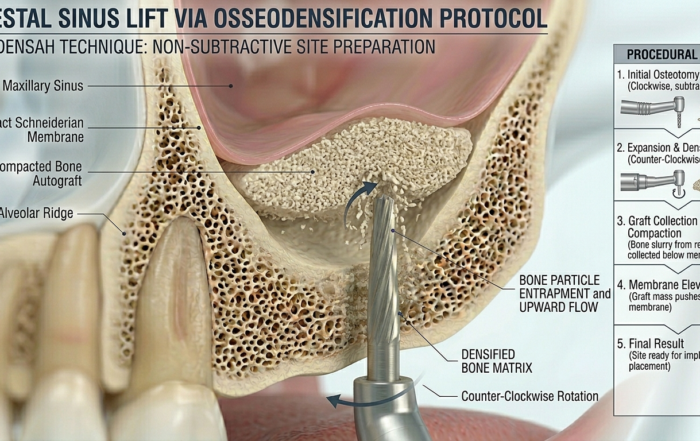
Latest Sinus Lifting Techniques in Modern Implant Dentistry
Latest Sinus Lifting Techniques in Modern Implant Dentistry A Comprehensive Clinical Review Introduction to Sinus Lifting in Implantology Sinus lifting, or maxillary sinus floor [...]
Biomechanics of the Triple Abutment & BOPiT Concept
Dental Biomechanics · Implant Science · Clinical Evidence Biomechanics of the Triple Abutment & BOPiT Concept How a saddle-shaped mathematical surface is rewriting the rules of load distribution [...]
The Woman Who Proved One Implant Could Hold Three Crowns
The Woman Who Proved One Implant Could Hold Three Crowns While the dental establishment looked away, Dr. Luciana Colepícolo spent 12 years building the [...]
ENPP1, The Molecular Brake That Limits Tissue Healing
ENPP1, The Molecular Brake That Limits Tissue Healing Introduction: A New Biological Barrier to Dental Regeneration Meet ENPP1—a protein most dentists have never heard [...]
The Rise of Self‑Healing Dental Biomaterials
The Rise of Self‑Healing Dental Biomaterials Introduction In modern restorative dentistry, durability and longevity of materials remain among the greatest clinical challenges. Traditional dental [...]

Water Fluoridation and IQ Scores in Offspring
Water Fluoridation and IQ Scores in Offspring Community water fluoridation has long been regarded as one of the most effective public health interventions for [...]