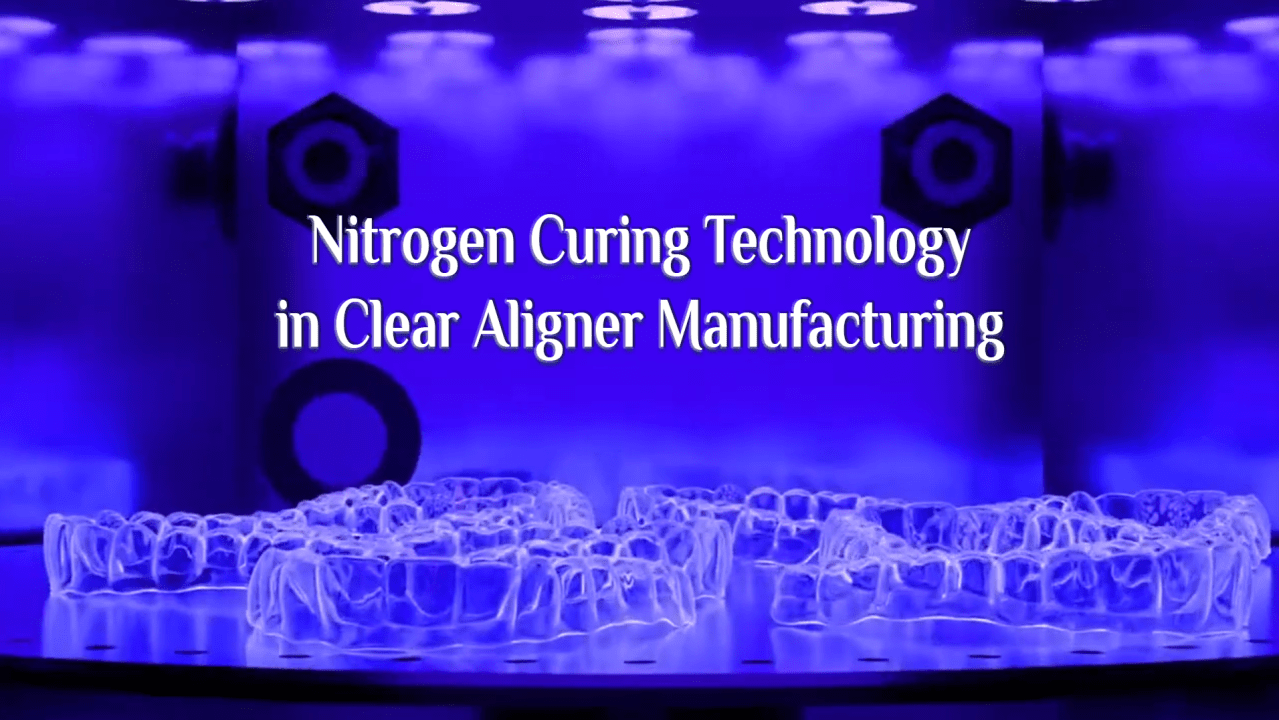
Nitrogen Curing vs. UV Curing in Clear Aligner Manufacturing
The world of dental technology has undergone a rapid evolution in recent years, with clear aligner manufacturing emerging as one of the fastest-growing segments. As patient demand for aesthetic, non-invasive orthodontic treatment continues to rise, dental labs and clinics are turning to advanced 3D printing solutions for efficient production. Among these innovations, nitrogen curing technology has emerged as a pivotal development—one that significantly enhances the quality, durability, and biocompatibility of 3D printed clear aligners.
This article examines the principles of nitrogen curing, its advantages over traditional UV curing methods, and the importance of this process in achieving optimal results in aligner production. We’ll also highlight how Graphy’s Tera Harz Cure, available at Dentinova Store, sets the benchmark for nitrogen-based post-processing.
What Is Nitrogen Curing in Dental 3D Printing?
In the context of dental manufacturing, nitrogen curing refers to the process of exposing a 3D-printed photopolymer (resin) to ultraviolet (UV) light within a nitrogen-rich atmosphere. This environment minimizes the presence of oxygen, which is known to inhibit proper polymerization of the printed object’s surface.
During conventional UV curing, oxygen in the air can interfere with the polymer chains, resulting in under-cured, tacky, or brittle surfaces. Nitrogen curing technology solves this issue by eliminating oxygen during the curing phase, ensuring that the entire surface of the aligner—not just the internal structure—is fully cured and chemically stable.
Why Oxygen Inhibition Is a Problem in Aligner Manufacturing
Oxygen inhibition affects the surface polymerization of resins, leaving an “inhibited layer” that remains partially uncured. In clear aligner production, this problem manifests as:
- Sticky surfaces
- Reduced transparency
- Compromised mechanical strength
- Lower patient comfort
- Potential biocompatibility issues
For clear aligners, where aesthetics, strength, and patient safety are non-negotiable, these issues can lead to product rejection or the need for time-consuming post-processing.
Benefits of Nitrogen Curing for Clear Aligners
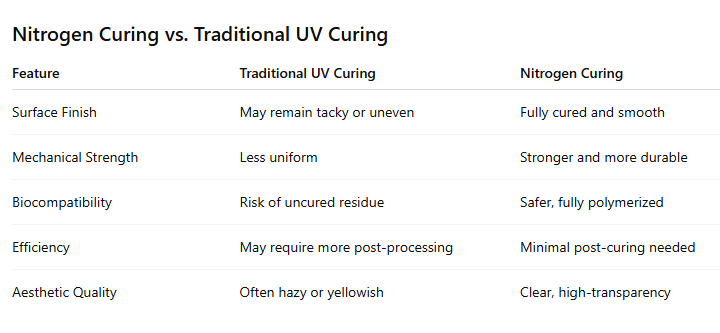
✅ 1. Complete Surface Curing
Nitrogen-rich environments eliminate the oxygen inhibition layer, allowing the resin to cure fully on all surfaces. This ensures consistent hardness and finish, critical for aligners that must withstand constant wear inside the mouth.
✅ 2. Improved Mechanical Properties
Nitrogen curing promotes better polymer cross-linking, enhancing tensile and flexural strength. This means aligners produced using this method are more resistant to cracking, deformation, and fatigue over time.
✅ 3. Superior Biocompatibility
Uncured resin residues can cause irritation or allergic reactions in patients. Nitrogen-cured aligners offer greater biological safety by eliminating uncured surface layers that may come in contact with oral tissues.
✅ 4. Better Aesthetics
Surface tackiness and yellowing are common problems with oxygen-inhibited curing. Nitrogen curing ensures a smooth, transparent finish, ideal for patients seeking discreet orthodontic treatment.
✅ 5. Reduced Post-Processing Time
Since surfaces are already fully cured, there’s less need for additional washing, polishing, or coating, speeding up the overall production workflow and reducing labor costs.
The Role of 3D Printing in Modern Aligner Production
The rise of 3D printed dental aligners has revolutionized orthodontics. Digital workflows allow clinicians to design, simulate, and fabricate precise aligner models with remarkable speed and accuracy. Resin-based 3D printing, particularly with biocompatible photopolymers, is the backbone of this shift.
However, the post-processing stage, especially curing, is where many labs lose efficiency or compromise quality. Incomplete curing can degrade aligner performance, increase wear-and-tear, and even lead to product recalls. This is why investing in high-performance curing units that support nitrogen environments is no longer optional; it’s essential.
Who Benefits Most from Nitrogen Curing Technology?
- Orthodontic clinics producing in-house aligners
- Dental laboratories serving multiple practices
- Clear aligner manufacturers with high-volume production
- R&D teams developing advanced dental materials
In all these cases, nitrogen curing ensures that printed aligners meet clinical, regulatory, and aesthetic standards with maximum efficiency.
How to Implement Nitrogen Curing in Your Workflow
To adopt nitrogen curing, labs need two key components:
- A nitrogen supply (gas tank or generator)
- A compatible UV curing chamber that allows nitrogen purging and consistent UV irradiance
When choosing the right curing unit, consider:
- Adjustable UV power levels
- LED arrangement for full exposure
- Automated nitrogen flow integration
- Safety features (auto shutoff, light uniformity diagnostics)
- Compatibility with your specific resin formulations
This brings us to one of the most advanced solutions currently available on the market.
Introducing the Tera Harz Cure by Graphy – Available at Dentinova Store
If you’re looking to upgrade your aligner production with cutting-edge nitrogen curing technology, look no further than the Tera Harz Cure from Graphy, now available at Dentinova Store.
This high-performance curing unit is specifically engineered for use with Graphy’s 3D printable resins and features:
- Controlled nitrogen curing chamber to eliminate oxygen inhibition
- Adjustable UV power levels (Lv.1 to Lv.5) for custom curing
- Top and side high-power UV LEDs for even curing
- 7.9” touch screen for intuitive operation
- Memory function to save up to 4 custom modes
- Safety auto shut-off and light uniformity diagnostics
- 200W power output and rapid curing cycles (280,000 mJ/cm² in 5 minutes)
Whether you’re a high-volume lab or a modern dental practice, the Tera Harz Cure will streamline your workflow, enhance your product quality, and reinforce patient trust with aligners that are crystal-clear, durable, and biologically safe.
Conclusion
Nitrogen curing represents a major leap forward in the clear aligner manufacturing process, solving the challenges of surface curing, mechanical weakness, and biocompatibility that plague traditional methods. As the dental industry continues to embrace digital workflows, integrating advanced post-processing technologies like the Graphy Tera Harz Cure will become essential for staying competitive and compliant.
Upgrade your clear aligner production today with Graphy’s Tera Harz Cure, exclusively available at Dentinova Store, where precision meets innovation.
Recent Articles






The world of dental technology has undergone a rapid evolution in recent years, with clear aligner manufacturing emerging as one of the fastest-growing segments. As patient demand for aesthetic, non-invasive orthodontic treatment continues to rise, dental labs and clinics are turning to advanced 3D printing solutions for efficient production. Among these innovations, nitrogen curing technology has emerged as a pivotal development—one that significantly enhances the quality, durability, and biocompatibility of 3D printed clear aligners.
This article examines the principles of nitrogen curing, its advantages over traditional UV curing methods, and the importance of this process in achieving optimal results in aligner production. We’ll also highlight how Graphy’s Tera Harz Cure, available at Dentinova Store, sets the benchmark for nitrogen-based post-processing.
What Is Nitrogen Curing in Dental 3D Printing?
In the context of dental manufacturing, nitrogen curing refers to the process of exposing a 3D-printed photopolymer (resin) to ultraviolet (UV) light within a nitrogen-rich atmosphere. This environment minimizes the presence of oxygen, which is known to inhibit proper polymerization of the printed object’s surface.
During conventional UV curing, oxygen in the air can interfere with the polymer chains, resulting in under-cured, tacky, or brittle surfaces. Nitrogen curing technology solves this issue by eliminating oxygen during the curing phase, ensuring that the entire surface of the aligner—not just the internal structure—is fully cured and chemically stable.
Why Oxygen Inhibition Is a Problem in Aligner Manufacturing
Oxygen inhibition affects the surface polymerization of resins, leaving an “inhibited layer” that remains partially uncured. In clear aligner production, this problem manifests as:
- Sticky surfaces
- Reduced transparency
- Compromised mechanical strength
- Lower patient comfort
- Potential biocompatibility issues
For clear aligners, where aesthetics, strength, and patient safety are non-negotiable, these issues can lead to product rejection or the need for time-consuming post-processing.
Benefits of Nitrogen Curing for Clear Aligners
✅ 1. Complete Surface Curing
Nitrogen-rich environments eliminate the oxygen inhibition layer, allowing the resin to cure fully on all surfaces. This ensures consistent hardness and finish, critical for aligners that must withstand constant wear inside the mouth.
✅ 2. Improved Mechanical Properties
Nitrogen curing promotes better polymer cross-linking, enhancing tensile and flexural strength. This means aligners produced using this method are more resistant to cracking, deformation, and fatigue over time.
✅ 3. Superior Biocompatibility
Uncured resin residues can cause irritation or allergic reactions in patients. Nitrogen-cured aligners offer greater biological safety by eliminating uncured surface layers that may come in contact with oral tissues.
✅ 4. Better Aesthetics
Surface tackiness and yellowing are common problems with oxygen-inhibited curing. Nitrogen curing ensures a smooth, transparent finish, ideal for patients seeking discreet orthodontic treatment.
✅ 5. Reduced Post-Processing Time
Since surfaces are already fully cured, there’s less need for additional washing, polishing, or coating, speeding up the overall production workflow and reducing labor costs.
The Role of 3D Printing in Modern Aligner Production
The rise of 3D printed dental aligners has revolutionized orthodontics. Digital workflows allow clinicians to design, simulate, and fabricate precise aligner models with remarkable speed and accuracy. Resin-based 3D printing, particularly with biocompatible photopolymers, is the backbone of this shift.
However, the post-processing stage, especially curing, is where many labs lose efficiency or compromise quality. Incomplete curing can degrade aligner performance, increase wear-and-tear, and even lead to product recalls. This is why investing in high-performance curing units that support nitrogen environments is no longer optional; it’s essential.
Who Benefits Most from Nitrogen Curing Technology?
- Orthodontic clinics producing in-house aligners
- Dental laboratories serving multiple practices
- Clear aligner manufacturers with high-volume production
- R&D teams developing advanced dental materials
In all these cases, nitrogen curing ensures that printed aligners meet clinical, regulatory, and aesthetic standards with maximum efficiency.
How to Implement Nitrogen Curing in Your Workflow
To adopt nitrogen curing, labs need two key components:
- A nitrogen supply (gas tank or generator)
- A compatible UV curing chamber that allows nitrogen purging and consistent UV irradiance
When choosing the right curing unit, consider:
- Adjustable UV power levels
- LED arrangement for full exposure
- Automated nitrogen flow integration
- Safety features (auto shutoff, light uniformity diagnostics)
- Compatibility with your specific resin formulations
This brings us to one of the most advanced solutions currently available on the market.
Introducing the Tera Harz Cure by Graphy – Available at Dentinova Store
If you’re looking to upgrade your aligner production with cutting-edge nitrogen curing technology, look no further than the Tera Harz Cure from Graphy, now available at Dentinova Store.
This high-performance curing unit is specifically engineered for use with Graphy’s 3D printable resins and features:
- Controlled nitrogen curing chamber to eliminate oxygen inhibition
- Adjustable UV power levels (Lv.1 to Lv.5) for custom curing
- Top and side high-power UV LEDs for even curing
- 7.9” touch screen for intuitive operation
- Memory function to save up to 4 custom modes
- Safety auto shut-off and light uniformity diagnostics
- 200W power output and rapid curing cycles (280,000 mJ/cm² in 5 minutes)
Whether you’re a high-volume lab or a modern dental practice, the Tera Harz Cure will streamline your workflow, enhance your product quality, and reinforce patient trust with aligners that are crystal-clear, durable, and biologically safe.
Conclusion
Nitrogen curing represents a major leap forward in the clear aligner manufacturing process, solving the challenges of surface curing, mechanical weakness, and biocompatibility that plague traditional methods. As the dental industry continues to embrace digital workflows, integrating advanced post-processing technologies like the Graphy Tera Harz Cure will become essential for staying competitive and compliant.
Upgrade your clear aligner production today with Graphy’s Tera Harz Cure, exclusively available at Dentinova Store, where precision meets innovation.
Recent Articles
Pulsed Electromagnetic Field (PEMF) Use in Implant Dentistry
Pulsed Electromagnetic Field (PEMF) Use in Implant Dentistry Abstract and Historical Background Pulsed Electromagnetic Field (PEMF) therapy refers to the application of low-frequency electromagnetic [...]
Laser Therapy in the Management of Peri-Implantitis
Laser Therapy in the Management of Peri-Implantitis Laser technology has become an increasingly valuable adjunct in the treatment of peri-implant diseases, particularly peri-implantitis. Its [...]
Magnetically Guided Dental Nanobots (CalBots) Are Real
Magnetically Guided Dental Nanobots (CalBots) Are Real The concept of nanobots in dentistry has long been associated with futuristic speculation. However, recent peer-reviewed research [...]
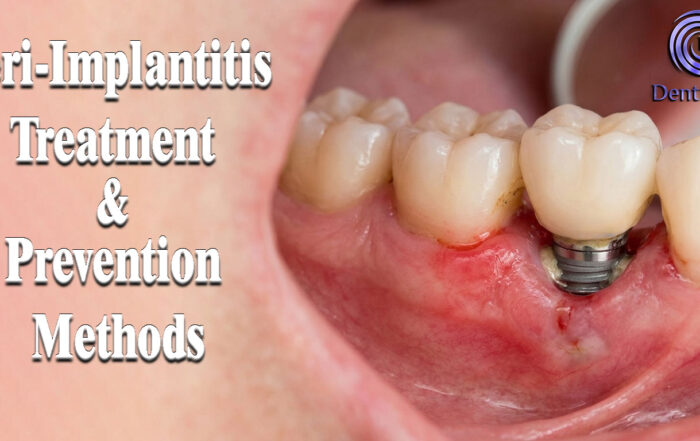
Peri-Implantitis Treatment & Prevention Methods
Peri-Implantitis Treatment & Prevention Methods Peri-implantitis remains one of the most significant biological complications affecting dental implants, posing a serious threat to long-term implant [...]
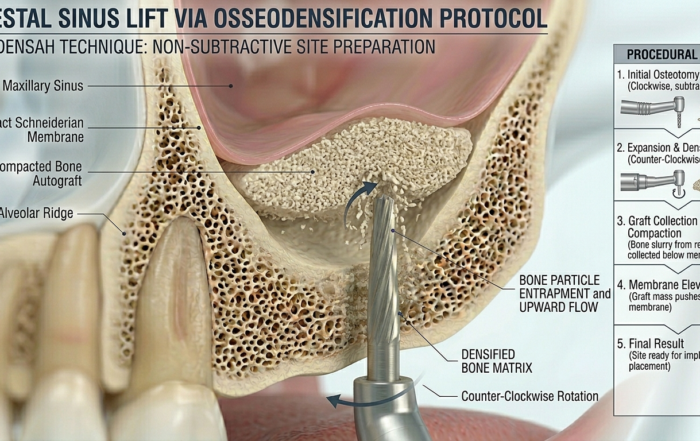
Latest Sinus Lifting Techniques in Modern Implant Dentistry
Latest Sinus Lifting Techniques in Modern Implant Dentistry A Comprehensive Clinical Review Introduction to Sinus Lifting in Implantology Sinus lifting, or maxillary sinus floor [...]
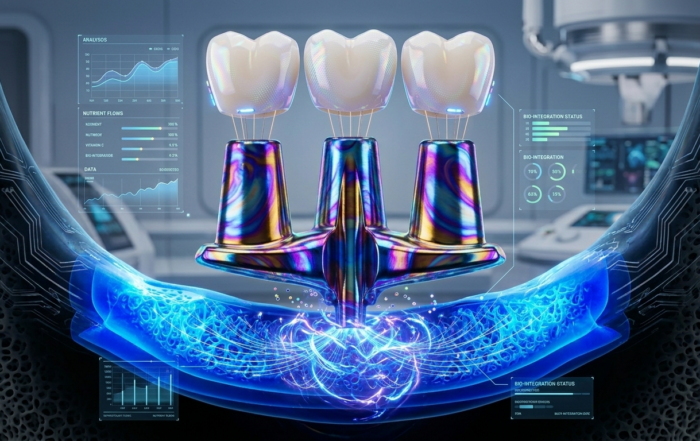
Biomechanics of the Triple Abutment & BOPiT Concept
Dental Biomechanics · Implant Science · Clinical Evidence Biomechanics of the Triple Abutment & BOPiT Concept How a saddle-shaped mathematical surface is rewriting the rules of load distribution [...]