The Missing Tile Syndrome: Talent vs Perfection Trap
The Missing Tile Syndrome is a phenomenon and a concept that offers a crucial psychological insight into how people and institutions often fixate on what is lacking rather than appreciating what is present.
The Missing Tile Syndrome is a phenomenon and a concept that offers a crucial psychological insight into how people and institutions often fixate on what is lacking rather than appreciating what is present.
Origin of the Missing Tile Syndrome
Coined by American thinker and political commentator Dennis Prager, the Missing Tile Syndrome is a metaphor for how people tend to focus on the one thing that’s missing in their lives, ignoring everything that’s functioning well. Prager illustrates this tendency using a simple visual analogy: Imagine a ceiling made of 100 tiles. If just one tile is missing, it’s that single gap that will grab people’s attention, obscuring the beauty and wholeness of the other 99 intact tiles.
Applied psychologically, the theory suggests that by fixating on a flaw—whether in ourselves, in others, or a system—we can overlook the full picture, and this focus can generate dissatisfaction, resentment, and even demotivation.
In the fast-paced and high-stakes environment of clinics and medical centers, where precision, compassion, and consistency are equally demanded, organizations continually aim for excellence in patient care and administrative performance. While this pursuit is commendable, it can also be a double-edged sword when it turns into an obsession with flawlessness. This is particularly true when management begins to measure employee performance based on a minor shortcoming rather than the overall value they bring to the institution.
How This Syndrome Affects Medical Institutions
When applied to the healthcare workplace, the Missing Tile Syndrome becomes particularly dangerous. Medical professionals operate in a field where mistakes can have serious consequences, and this naturally breeds a culture of vigilance. However, when this vigilance evolves into hypercriticism, it erodes morale and can undermine institutional stability.
Let’s consider an example:
A physician consistently delivers high-quality care, builds great rapport with patients, contributes to mentoring junior staff, and maintains thorough documentation. However, she occasionally runs a few minutes late due to the time she spends reassuring anxious patients. If management focuses solely on her tardiness without recognizing her overall contributions, she may feel undervalued and demoralized.
This type of narrow focus causes several institutional problems:
Lower job satisfaction among staff
Reduced engagement and initiative
Higher employee turnover
Loss of skilled professionals who feel unappreciated
Why the Obsession with Perfection Is Harmful
In healthcare, striving for continuous improvement and safety is essential. However, there is a clear difference between striving for growth and obsessing over perfection. The former fosters a supportive, learning-oriented culture; the latter breeds anxiety and fear.
When employees perceive that even one misstep will overshadow all their accomplishments, they are less likely to:
Take on new challenges or responsibilities
Offer creative solutions or feedback
Admit errors (which is dangerous in healthcare)
Commit long-term to the organization
In other words, the pursuit of perfection, when misapplied, stifles the very growth and excellence it aims to promote.
Healthy Ways to Support and Evaluate Good Employees
Leaders in healthcare institutions must develop systems that balance accountability with encouragement. Here’s how:
Focus on the complete picture: Always assess an employee based on a broad set of performance indicators, not just isolated errors.
Start with appreciation: Acknowledge and celebrate achievements before introducing suggestions for improvement.
Deliver feedback constructively: Use balanced, non-punitive language to communicate areas of concern.
Encourage transparent communication: Make it safe for staff to share difficulties without fear of harsh judgment.
Build trust, not fear: Recognize that consistent good performance builds credibility—even when small mistakes occur.
Additionally, periodic reviews should not merely be moments for criticism, but opportunities for dialogue, development, and recognition.
Accurate Employee Assessment Using the Nine-Box Grid (Gapoloy Framework)
To improve how performance is evaluated across clinical and administrative roles, many institutions now use frameworks like the Nine-Box Grid, referred to here as the Gapoloy Framework. This powerful model helps organizations make data-informed, balanced decisions about employee performance and potential.
How It Works
The Nine-Box Grid is a matrix with two key dimensions:
Current Performance: The employee’s current ability to meet or exceed job expectations.
Future Potential: The employee’s capability to grow into higher roles or responsibilities.
This framework generates nine possible employee classifications, including:
High Performance / High Potential: Future leaders. Invest in them through leadership programs and mentorship.
High Performance / Moderate Potential: Solid contributors in current roles. Provide recognition and role enrichment.
Moderate Performance / High Potential: Possibly underutilized staff. Identify barriers and provide growth opportunities.
Low Performance / High Potential: New or transitioning staff who need support. Offer training and short-term mentoring.
And so on…
This grid ensures that each employee is assessed in context, avoiding snap judgments based on single flaws or isolated events.
Bridging Gapoloy and the Missing Tile Syndrome
Using the Gapoloy Framework helps shift the organizational mindset away from the Missing Tile Syndrome. Instead of obsessing over an employee’s minor imperfection, the system encourages:
Holistic evaluation
Strategic development planning
Retention of high-value staff
Focused investment in growth
In practice, this could mean that instead of focusing solely on a nurse’s documentation delays, the manager looks at her extraordinary patient feedback, mentorship efforts, and overall clinical quality. Then, targeted support can be offered to improve the documentation issue, without disregarding her strengths.
The Role of Leadership in Changing the Culture
Executives and department heads have a major role to play in creating a psychologically safe environment. Culture flows from leadership, and if leaders model appreciation, fairness, and understanding, the rest of the organization will follow.
Steps leaders can take include:
Recognizing contributions publicly
Creating awards or appreciation programs
Instituting regular check-ins focused on well-being
Encouraging self-assessment and mutual feedback
Moreover, when leaders admit their imperfections and emphasize progress over perfection, they make it acceptable—and even admirable—for others to do the same.
Recommendation for Medical Administrators
To prevent the loss of great talent to burnout, frustration, or demoralization, administrators should:
Implement tools like the Gapoloy Framework to guide employee development
Regularly audit performance review processes to ensure fairness and balance
Train mid-level managers in emotional intelligence and constructive feedback
Prioritize staff retention as a strategic objective, not just a human resources task
A single missing tile should never obscure the value of an otherwise beautiful ceiling. Similarly, a single flaw should never define a dedicated, high-performing professional.
Do Not Fall For The Missing Tile Syndrome Trap
The Missing Tile Syndrome offers a crucial reminder for healthcare institutions: don’t let one imperfection erase a lifetime of contributions. The pursuit of perfection, though well-intentioned, can be damaging when it overshadows consistency, loyalty, and effort.
By shifting focus toward holistic, structured assessments like the Gapoloy Framework, organizations can make better decisions, nurture employee growth, and maintain a culture that attracts and retains top talent.
Excellence in healthcare is not about lawlessness, it’s about progress, purpose, and people.
Recent Articles


























The Missing Tile Syndrome is a phenomenon and a concept that offers a crucial psychological insight into how people and institutions often fixate on what is lacking rather than appreciating what is present.
Origin of the Missing Tile Syndrome
Coined by American thinker and political commentator Dennis Prager, the Missing Tile Syndrome is a metaphor for how people tend to focus on the one thing that’s missing in their lives, ignoring everything that’s functioning well. Prager illustrates this tendency using a simple visual analogy: Imagine a ceiling made of 100 tiles. If just one tile is missing, it’s that single gap that will grab people’s attention, obscuring the beauty and wholeness of the other 99 intact tiles.
Applied psychologically, the theory suggests that by fixating on a flaw—whether in ourselves, in others, or a system—we can overlook the full picture, and this focus can generate dissatisfaction, resentment, and even demotivation.
In the fast-paced and high-stakes environment of clinics and medical centers, where precision, compassion, and consistency are equally demanded, organizations continually aim for excellence in patient care and administrative performance. While this pursuit is commendable, it can also be a double-edged sword when it turns into an obsession with flawlessness. This is particularly true when management begins to measure employee performance based on a minor shortcoming rather than the overall value they bring to the institution.
How This Syndrome Affects Medical Institutions
When applied to the healthcare workplace, the Missing Tile Syndrome becomes particularly dangerous. Medical professionals operate in a field where mistakes can have serious consequences, and this naturally breeds a culture of vigilance. However, when this vigilance evolves into hypercriticism, it erodes morale and can undermine institutional stability.
Let’s consider an example:
A physician consistently delivers high-quality care, builds great rapport with patients, contributes to mentoring junior staff, and maintains thorough documentation. However, she occasionally runs a few minutes late due to the time she spends reassuring anxious patients. If management focuses solely on her tardiness without recognizing her overall contributions, she may feel undervalued and demoralized.
This type of narrow focus causes several institutional problems:
Lower job satisfaction among staff
Reduced engagement and initiative
Higher employee turnover
Loss of skilled professionals who feel unappreciated
Why the Obsession with Perfection Is Harmful
In healthcare, striving for continuous improvement and safety is essential. However, there is a clear difference between striving for growth and obsessing over perfection. The former fosters a supportive, learning-oriented culture; the latter breeds anxiety and fear.
When employees perceive that even one misstep will overshadow all their accomplishments, they are less likely to:
Take on new challenges or responsibilities
Offer creative solutions or feedback
Admit errors (which is dangerous in healthcare)
Commit long-term to the organization
In other words, the pursuit of perfection, when misapplied, stifles the very growth and excellence it aims to promote.
Healthy Ways to Support and Evaluate Good Employees
Leaders in healthcare institutions must develop systems that balance accountability with encouragement. Here’s how:
Focus on the complete picture: Always assess an employee based on a broad set of performance indicators, not just isolated errors.
Start with appreciation: Acknowledge and celebrate achievements before introducing suggestions for improvement.
Deliver feedback constructively: Use balanced, non-punitive language to communicate areas of concern.
Encourage transparent communication: Make it safe for staff to share difficulties without fear of harsh judgment.
Build trust, not fear: Recognize that consistent good performance builds credibility—even when small mistakes occur.
Additionally, periodic reviews should not merely be moments for criticism, but opportunities for dialogue, development, and recognition.
Accurate Employee Assessment Using the Nine-Box Grid (Gapoloy Framework)
To improve how performance is evaluated across clinical and administrative roles, many institutions now use frameworks like the Nine-Box Grid, referred to here as the Gapoloy Framework. This powerful model helps organizations make data-informed, balanced decisions about employee performance and potential.
How It Works
The Nine-Box Grid is a matrix with two key dimensions:
Current Performance: The employee’s current ability to meet or exceed job expectations.
Future Potential: The employee’s capability to grow into higher roles or responsibilities.
This framework generates nine possible employee classifications, including:
High Performance / High Potential: Future leaders. Invest in them through leadership programs and mentorship.
High Performance / Moderate Potential: Solid contributors in current roles. Provide recognition and role enrichment.
Moderate Performance / High Potential: Possibly underutilized staff. Identify barriers and provide growth opportunities.
Low Performance / High Potential: New or transitioning staff who need support. Offer training and short-term mentoring.
And so on…
This grid ensures that each employee is assessed in context, avoiding snap judgments based on single flaws or isolated events.
Bridging Gapoloy and the Missing Tile Syndrome
Using the Gapoloy Framework helps shift the organizational mindset away from the Missing Tile Syndrome. Instead of obsessing over an employee’s minor imperfection, the system encourages:
Holistic evaluation
Strategic development planning
Retention of high-value staff
Focused investment in growth
In practice, this could mean that instead of focusing solely on a nurse’s documentation delays, the manager looks at her extraordinary patient feedback, mentorship efforts, and overall clinical quality. Then, targeted support can be offered to improve the documentation issue, without disregarding her strengths.
The Role of Leadership in Changing the Culture
Executives and department heads have a major role to play in creating a psychologically safe environment. Culture flows from leadership, and if leaders model appreciation, fairness, and understanding, the rest of the organization will follow.
Steps leaders can take include:
Recognizing contributions publicly
Creating awards or appreciation programs
Instituting regular check-ins focused on well-being
Encouraging self-assessment and mutual feedback
Moreover, when leaders admit their imperfections and emphasize progress over perfection, they make it acceptable—and even admirable—for others to do the same.
Recommendation for Medical Administrators
To prevent the loss of great talent to burnout, frustration, or demoralization, administrators should:
Implement tools like the Gapoloy Framework to guide employee development
Regularly audit performance review processes to ensure fairness and balance
Train mid-level managers in emotional intelligence and constructive feedback
Prioritize staff retention as a strategic objective, not just a human resources task
A single missing tile should never obscure the value of an otherwise beautiful ceiling. Similarly, a single flaw should never define a dedicated, high-performing professional.
Do Not Fall For The Missing Tile Syndrome Trap
The Missing Tile Syndrome offers a crucial reminder for healthcare institutions: don’t let one imperfection erase a lifetime of contributions. The pursuit of perfection, though well-intentioned, can be damaging when it overshadows consistency, loyalty, and effort.
By shifting focus toward holistic, structured assessments like the Gapoloy Framework, organizations can make better decisions, nurture employee growth, and maintain a culture that attracts and retains top talent.
Excellence in healthcare is not about lawlessness, it’s about progress, purpose, and people.
Recent Articles

Magnetically Guided Dental Nanobots (CalBots) Are Real
Magnetically Guided Dental Nanobots (CalBots) Are Real The concept of nanobots in dentistry has long been associated with futuristic speculation. However, recent peer-reviewed research [...]

Peri-Implantitis Treatment & Prevention Methods
Peri-Implantitis Treatment & Prevention Methods Peri-implantitis remains one of the most significant biological complications affecting dental implants, posing a serious threat to long-term implant [...]
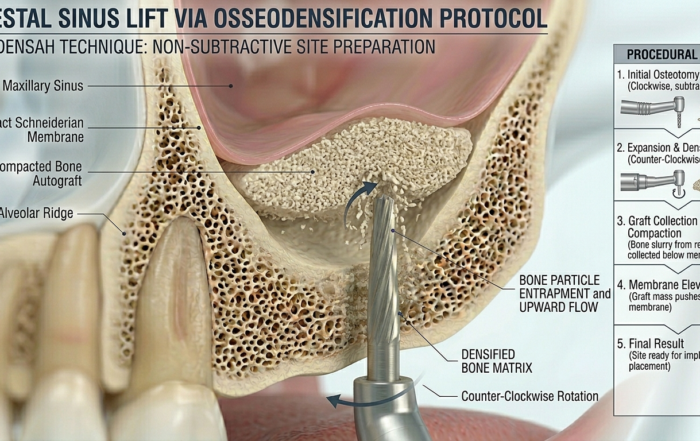
Latest Sinus Lifting Techniques in Modern Implant Dentistry
Latest Sinus Lifting Techniques in Modern Implant Dentistry A Comprehensive Clinical Review Introduction to Sinus Lifting in Implantology Sinus lifting, or maxillary sinus floor [...]
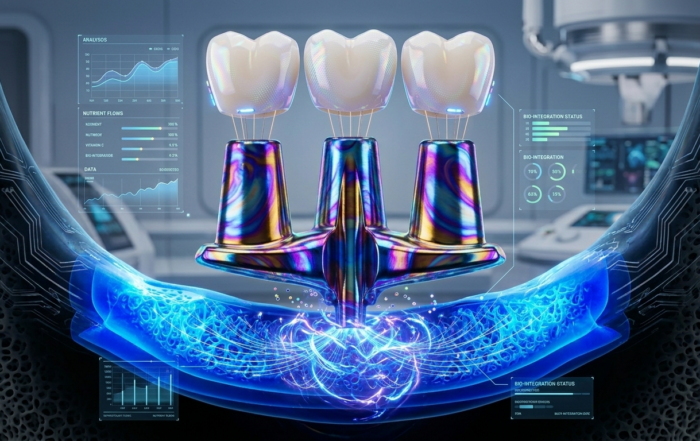
Biomechanics of the Triple Abutment & BOPiT Concept
Dental Biomechanics · Implant Science · Clinical Evidence Biomechanics of the Triple Abutment & BOPiT Concept How a saddle-shaped mathematical surface is rewriting the rules of load distribution [...]
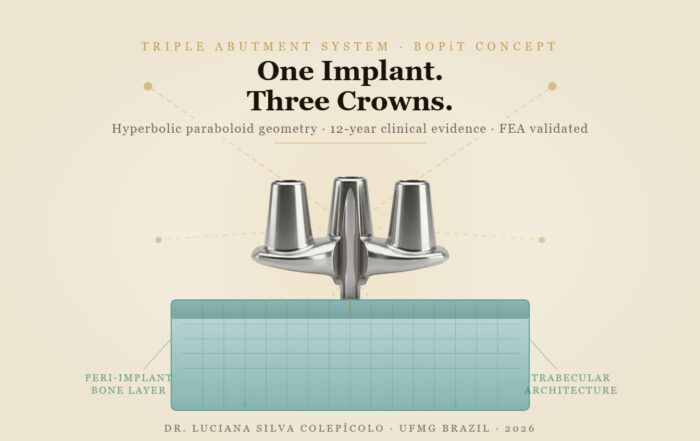
The Woman Who Proved One Implant Could Hold Three Crowns
The Woman Who Proved One Implant Could Hold Three Crowns While the dental establishment looked away, Dr. Luciana Colepícolo spent 12 years building the [...]
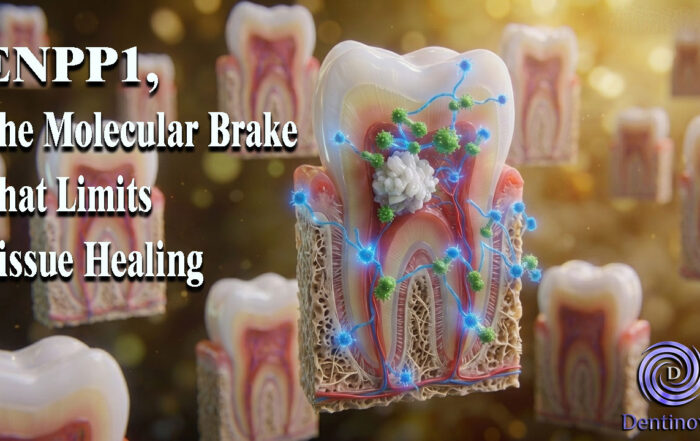
ENPP1, The Molecular Brake That Limits Tissue Healing
ENPP1, The Molecular Brake That Limits Tissue Healing Introduction: A New Biological Barrier to Dental Regeneration Meet ENPP1—a protein most dentists have never heard [...]