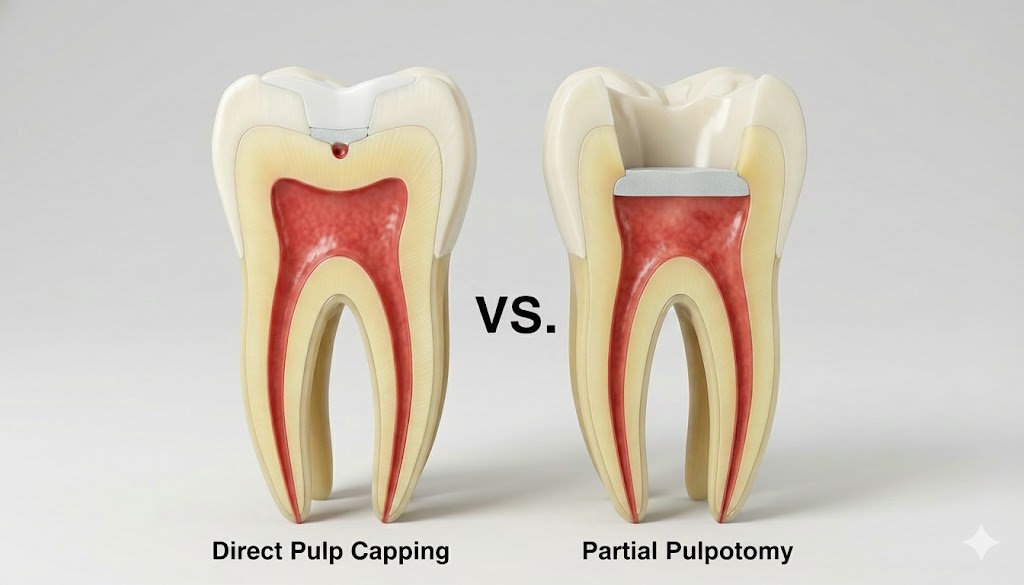
Pulp Capping VS. Partial Pulpotomy in Reversible Pulpitis
Introduction
Preserving pulp vitality has become a central objective in contemporary restorative dentistry. With advances in biomaterials and improved understanding of pulpal biology, vital pulp therapy (VPT) is increasingly favored over more invasive procedures such as full pulpotomy or root canal treatment, particularly in teeth diagnosed with reversible pulpitis. Among VPT techniques, direct pulp capping (DPC) and partial pulpotomy (PP) are the most commonly debated options when carious pulp exposure occurs in mature permanent teeth.
Despite their widespread clinical use, clear evidence-based guidelines to support the choice between these two procedures have historically been limited. A recent randomized clinical trial has provided valuable comparative data, demonstrating that both approaches can be highly effective when appropriate case selection and strict clinical protocols are followed. This article reviews and interprets these findings in a clinically relevant, SEO-optimized format to guide dental professionals in everyday decision-making.
Understanding Reversible Pulpitis and Carious Pulp Exposure
Reversible pulpitis is characterized by short, sharp pain triggered by thermal or mechanical stimuli, without spontaneous or lingering pain. Histologically, bacterial penetration is usually confined to the deepest layers of dentin, leaving the pulp tissue largely intact. This biological distinction is crucial, as it enables conservative treatment focused on healing rather than pulp removal.
Carious lesions are currently classified as deep (reaching the inner quarter of dentin) or extremely deep (extending through the entire dentin thickness). While extremely deep caries increases the likelihood of pulp exposure, exposure alone does not necessarily indicate irreversible damage. When clinical findings confirm pulp vitality and inflammation is reversible, VPT remains a predictable and biologically sound option.
Direct Pulp Capping: Concept and Indications
Direct pulp capping involves placing a biocompatible material directly over an exposed pulp to encourage healing and the formation of a dentin bridge. It is indicated when:
The pulp exposure is carious but limited
Bleeding is controlled within a short time (usually ≤ 5–8 minutes)
The exposed pulp appears uniformly red and healthy
No signs of necrosis or purulence are present
With the introduction of hydraulic calcium silicate materials, such as mineral trioxide aggregate (MTA) and newer premixed bioceramics, the success rates of DPC have improved significantly compared with traditional calcium hydroxide.
Partial Pulpotomy: Concept and Indications
Partial pulpotomy involves the removal of approximately 2–3 mm of inflamed coronal pulp tissue, followed by placement of a pulp-capping biomaterial. The rationale behind PP is the elimination of superficially inflamed tissue while preserving the remaining healthy pulp.
PP is often favored when:
The pulp exposure is larger
Bleeding control is slightly delayed
There is concern about superficial bacterial contamination
Historically, PP has been associated with higher success rates, especially in traumatic pulp exposures. However, its role in carious exposures with reversible pulpitis has required further clarification.
Overview of the Randomized Clinical Trial
A double-blind, CONSORT-compliant randomized clinical trial evaluated 140 mature permanent teeth diagnosed with reversible pulpitis or normal pulp status and carious pulp exposure. Teeth were randomly allocated to either direct pulp capping (67 teeth) or partial pulpotomy (73 teeth).
All procedures were performed under rubber dam isolation, using 5.25% sodium hypochlorite for disinfection and hemostasis. A premixed calcium silicate bioceramic putty (NeoPUTTY) was used as the pulp capping material in both groups, followed by immediate adhesive composite restoration.
Patients were followed clinically and radiographically at 6 months and 12 months, with success defined as:
Absence of pain or pathology
Positive pulp sensibility response
Normal periapical tissues
Key Clinical Findings
Both treatment modalities demonstrated high and comparable success rates:
At 6 months
Partial pulpotomy: 94.4% success
Direct pulp capping: 84.4% success
At 12 months
Partial pulpotomy: 91.5% success
Direct pulp capping: 81.3% success
Although partial pulpotomy showed slightly higher success percentages, the difference was not statistically significant. Importantly, both groups exhibited significant pain reduction within one week postoperatively, with more than 95% of patients reporting no or only mild discomfort.
Prognostic Factors and Clinical Decision-Making
Multivariate analysis revealed no significant prognostic factors influencing the success of either procedure. Variables such as:
Patient age
Preoperative pain level
Exposure size
Bleeding time (within accepted limits)
Caries depth on radiographs
Tooth type and cavity configuration
did not significantly affect outcomes.
These findings emphasize that intraoperative pulp assessment and the ability to achieve hemostasis are the most critical determinants when choosing between DPC and PP, rather than radiographic appearance or exposure size alone.
Role of Modern Bioceramic Materials
The use of calcium silicate–based materials has been instrumental in the success of contemporary VPT. These materials provide:
Sustained alkalinity and antibacterial effects
Excellent sealing ability
Favorable dentin bridge formation with minimal defects
Compatibility with immediate adhesive restoration
NeoPUTTY, in particular, offers improved handling, stain resistance, and predictable biological outcomes, supporting its use in both DPC and PP.
Clinical Implications for Dental Practice
From a practical standpoint, this evidence supports a conservative, pulp-preserving approach for carious pulp exposures in mature teeth with reversible pulpitis. Clinicians can confidently select either DPC or PP based on real-time pulp conditions rather than rigid preoperative assumptions.
Patient education remains essential, as delayed or silent progression to irreversible pulpitis can occur if failures are not addressed promptly. Regular follow-up and monitoring are therefore integral components of VPT success.
Conclusion
Both direct pulp capping and partial pulpotomy are effective and reliable treatment options for carious pulp exposure in mature permanent teeth diagnosed with reversible pulpitis. While partial pulpotomy demonstrated a marginally higher success rate, the difference was not statistically significant. Careful intraoperative assessment, effective hemostasis, and the use of modern bioceramic materials remain the cornerstone of successful vital pulp therapy.
Frequently Asked Questions (FAQ)
1. Is direct pulp capping safe in carious exposures?
Yes. When reversible pulpitis is correctly diagnosed and bleeding is controlled promptly, direct pulp capping can achieve high success rates using modern bioceramic materials.
2. Does partial pulpotomy always perform better than pulp capping?
Not necessarily. Although partial pulpotomy showed slightly higher success in this study, the difference was not statistically significant, making both techniques clinically valid.
3. Does the size of pulp exposure affect treatment success?
No significant effect was observed when calcium silicate materials were used, provided the pulp tissue appeared healthy and hemostasis was achieved.
4. How important is bleeding control during VPT?
Bleeding control is critical. Failure to achieve hemostasis within an acceptable timeframe may indicate irreversible pulp damage and necessitate more invasive treatment.
5. Can VPT be used in older patients?
Yes. Patient age did not significantly influence outcomes, and mature teeth across a wide age range responded favorably.
6. What material is preferred for pulp capping today?
Hydraulic calcium silicate materials, such as MTA and premixed bioceramic putties, are currently preferred due to superior biological and sealing properties.
References
1- Taha NA, Jaradat HB, DkmaK A, Abidin IZ. Carious Pulp Exposure in Mature Teeth With Reversible Pulpitis: A Randomized Clinical Trial of Direct Pulp Capping and Partial Pulpotomy. Journal of Endodontics. 2025;51:1342–1350.
2- American Association of Endodontists. Clinical Considerations for Vital Pulp Therapy.
3- European Society of Endodontology. Position Statement on Vital Pulp Therapy.
Recent Articles












Introduction
Preserving pulp vitality has become a central objective in contemporary restorative dentistry. With advances in biomaterials and improved understanding of pulpal biology, vital pulp therapy (VPT) is increasingly favored over more invasive procedures such as full pulpotomy or root canal treatment, particularly in teeth diagnosed with reversible pulpitis. Among VPT techniques, direct pulp capping (DPC) and partial pulpotomy (PP) are the most commonly debated options when carious pulp exposure occurs in mature permanent teeth.
Despite their widespread clinical use, clear evidence-based guidelines to support the choice between these two procedures have historically been limited. A recent randomized clinical trial has provided valuable comparative data, demonstrating that both approaches can be highly effective when appropriate case selection and strict clinical protocols are followed. This article reviews and interprets these findings in a clinically relevant, SEO-optimized format to guide dental professionals in everyday decision-making.
Understanding Reversible Pulpitis and Carious Pulp Exposure
Reversible pulpitis is characterized by short, sharp pain triggered by thermal or mechanical stimuli, without spontaneous or lingering pain. Histologically, bacterial penetration is usually confined to the deepest layers of dentin, leaving the pulp tissue largely intact. This biological distinction is crucial, as it enables conservative treatment focused on healing rather than pulp removal.
Carious lesions are currently classified as deep (reaching the inner quarter of dentin) or extremely deep (extending through the entire dentin thickness). While extremely deep caries increases the likelihood of pulp exposure, exposure alone does not necessarily indicate irreversible damage. When clinical findings confirm pulp vitality and inflammation is reversible, VPT remains a predictable and biologically sound option.
Direct Pulp Capping: Concept and Indications
Direct pulp capping involves placing a biocompatible material directly over an exposed pulp to encourage healing and the formation of a dentin bridge. It is indicated when:
The pulp exposure is carious but limited
Bleeding is controlled within a short time (usually ≤ 5–8 minutes)
The exposed pulp appears uniformly red and healthy
No signs of necrosis or purulence are present
With the introduction of hydraulic calcium silicate materials, such as mineral trioxide aggregate (MTA) and newer premixed bioceramics, the success rates of DPC have improved significantly compared with traditional calcium hydroxide.
Partial Pulpotomy: Concept and Indications
Partial pulpotomy involves the removal of approximately 2–3 mm of inflamed coronal pulp tissue, followed by placement of a pulp-capping biomaterial. The rationale behind PP is the elimination of superficially inflamed tissue while preserving the remaining healthy pulp.
PP is often favored when:
The pulp exposure is larger
Bleeding control is slightly delayed
There is concern about superficial bacterial contamination
Historically, PP has been associated with higher success rates, especially in traumatic pulp exposures. However, its role in carious exposures with reversible pulpitis has required further clarification.
Overview of the Randomized Clinical Trial
A double-blind, CONSORT-compliant randomized clinical trial evaluated 140 mature permanent teeth diagnosed with reversible pulpitis or normal pulp status and carious pulp exposure. Teeth were randomly allocated to either direct pulp capping (67 teeth) or partial pulpotomy (73 teeth).
All procedures were performed under rubber dam isolation, using 5.25% sodium hypochlorite for disinfection and hemostasis. A premixed calcium silicate bioceramic putty (NeoPUTTY) was used as the pulp capping material in both groups, followed by immediate adhesive composite restoration.
Patients were followed clinically and radiographically at 6 months and 12 months, with success defined as:
Absence of pain or pathology
Positive pulp sensibility response
Normal periapical tissues
Key Clinical Findings
Both treatment modalities demonstrated high and comparable success rates:
At 6 months
Partial pulpotomy: 94.4% success
Direct pulp capping: 84.4% success
At 12 months
Partial pulpotomy: 91.5% success
Direct pulp capping: 81.3% success
Although partial pulpotomy showed slightly higher success percentages, the difference was not statistically significant. Importantly, both groups exhibited significant pain reduction within one week postoperatively, with more than 95% of patients reporting no or only mild discomfort.
Prognostic Factors and Clinical Decision-Making
Multivariate analysis revealed no significant prognostic factors influencing the success of either procedure. Variables such as:
Patient age
Preoperative pain level
Exposure size
Bleeding time (within accepted limits)
Caries depth on radiographs
Tooth type and cavity configuration
did not significantly affect outcomes.
These findings emphasize that intraoperative pulp assessment and the ability to achieve hemostasis are the most critical determinants when choosing between DPC and PP, rather than radiographic appearance or exposure size alone.
Role of Modern Bioceramic Materials
The use of calcium silicate–based materials has been instrumental in the success of contemporary VPT. These materials provide:
Sustained alkalinity and antibacterial effects
Excellent sealing ability
Favorable dentin bridge formation with minimal defects
Compatibility with immediate adhesive restoration
NeoPUTTY, in particular, offers improved handling, stain resistance, and predictable biological outcomes, supporting its use in both DPC and PP.
Clinical Implications for Dental Practice
From a practical standpoint, this evidence supports a conservative, pulp-preserving approach for carious pulp exposures in mature teeth with reversible pulpitis. Clinicians can confidently select either DPC or PP based on real-time pulp conditions rather than rigid preoperative assumptions.
Patient education remains essential, as delayed or silent progression to irreversible pulpitis can occur if failures are not addressed promptly. Regular follow-up and monitoring are therefore integral components of VPT success.
Conclusion
Both direct pulp capping and partial pulpotomy are effective and reliable treatment options for carious pulp exposure in mature permanent teeth diagnosed with reversible pulpitis. While partial pulpotomy demonstrated a marginally higher success rate, the difference was not statistically significant. Careful intraoperative assessment, effective hemostasis, and the use of modern bioceramic materials remain the cornerstone of successful vital pulp therapy.
Frequently Asked Questions (FAQ)
1. Is direct pulp capping safe in carious exposures?
Yes. When reversible pulpitis is correctly diagnosed and bleeding is controlled promptly, direct pulp capping can achieve high success rates using modern bioceramic materials.
2. Does partial pulpotomy always perform better than pulp capping?
Not necessarily. Although partial pulpotomy showed slightly higher success in this study, the difference was not statistically significant, making both techniques clinically valid.
3. Does the size of pulp exposure affect treatment success?
No significant effect was observed when calcium silicate materials were used, provided the pulp tissue appeared healthy and hemostasis was achieved.
4. How important is bleeding control during VPT?
Bleeding control is critical. Failure to achieve hemostasis within an acceptable timeframe may indicate irreversible pulp damage and necessitate more invasive treatment.
5. Can VPT be used in older patients?
Yes. Patient age did not significantly influence outcomes, and mature teeth across a wide age range responded favorably.
6. What material is preferred for pulp capping today?
Hydraulic calcium silicate materials, such as MTA and premixed bioceramic putties, are currently preferred due to superior biological and sealing properties.
References
1- Taha NA, Jaradat HB, DkmaK A, Abidin IZ. Carious Pulp Exposure in Mature Teeth With Reversible Pulpitis: A Randomized Clinical Trial of Direct Pulp Capping and Partial Pulpotomy. Journal of Endodontics. 2025;51:1342–1350.
2- American Association of Endodontists. Clinical Considerations for Vital Pulp Therapy.
3- European Society of Endodontology. Position Statement on Vital Pulp Therapy.
Recent Articles
Pulsed Electromagnetic Field (PEMF) Use in Implant Dentistry
Pulsed Electromagnetic Field (PEMF) Use in Implant Dentistry Abstract and Historical Background Pulsed Electromagnetic Field (PEMF) therapy refers to the application of low-frequency electromagnetic [...]
Laser Therapy in the Management of Peri-Implantitis
Laser Therapy in the Management of Peri-Implantitis Laser technology has become an increasingly valuable adjunct in the treatment of peri-implant diseases, particularly peri-implantitis. Its [...]
Magnetically Guided Dental Nanobots (CalBots) Are Real
Magnetically Guided Dental Nanobots (CalBots) Are Real The concept of nanobots in dentistry has long been associated with futuristic speculation. However, recent peer-reviewed research [...]
Peri-Implantitis Treatment & Prevention Methods
Peri-Implantitis Treatment & Prevention Methods Peri-implantitis remains one of the most significant biological complications affecting dental implants, posing a serious threat to long-term implant [...]
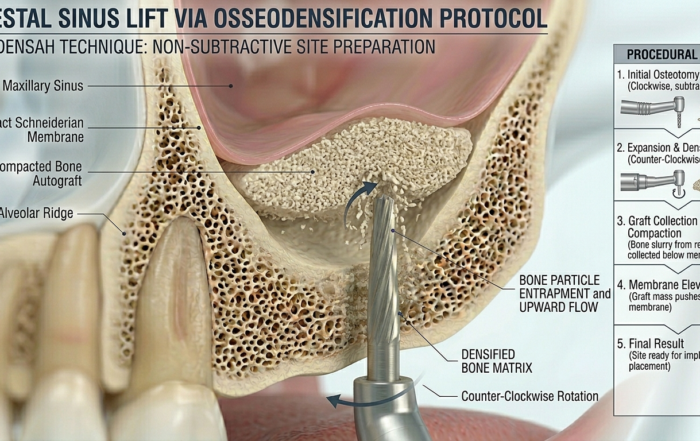
Latest Sinus Lifting Techniques in Modern Implant Dentistry
Latest Sinus Lifting Techniques in Modern Implant Dentistry A Comprehensive Clinical Review Introduction to Sinus Lifting in Implantology Sinus lifting, or maxillary sinus floor [...]
Biomechanics of the Triple Abutment & BOPiT Concept
Dental Biomechanics · Implant Science · Clinical Evidence Biomechanics of the Triple Abutment & BOPiT Concept How a saddle-shaped mathematical surface is rewriting the rules of load distribution [...]